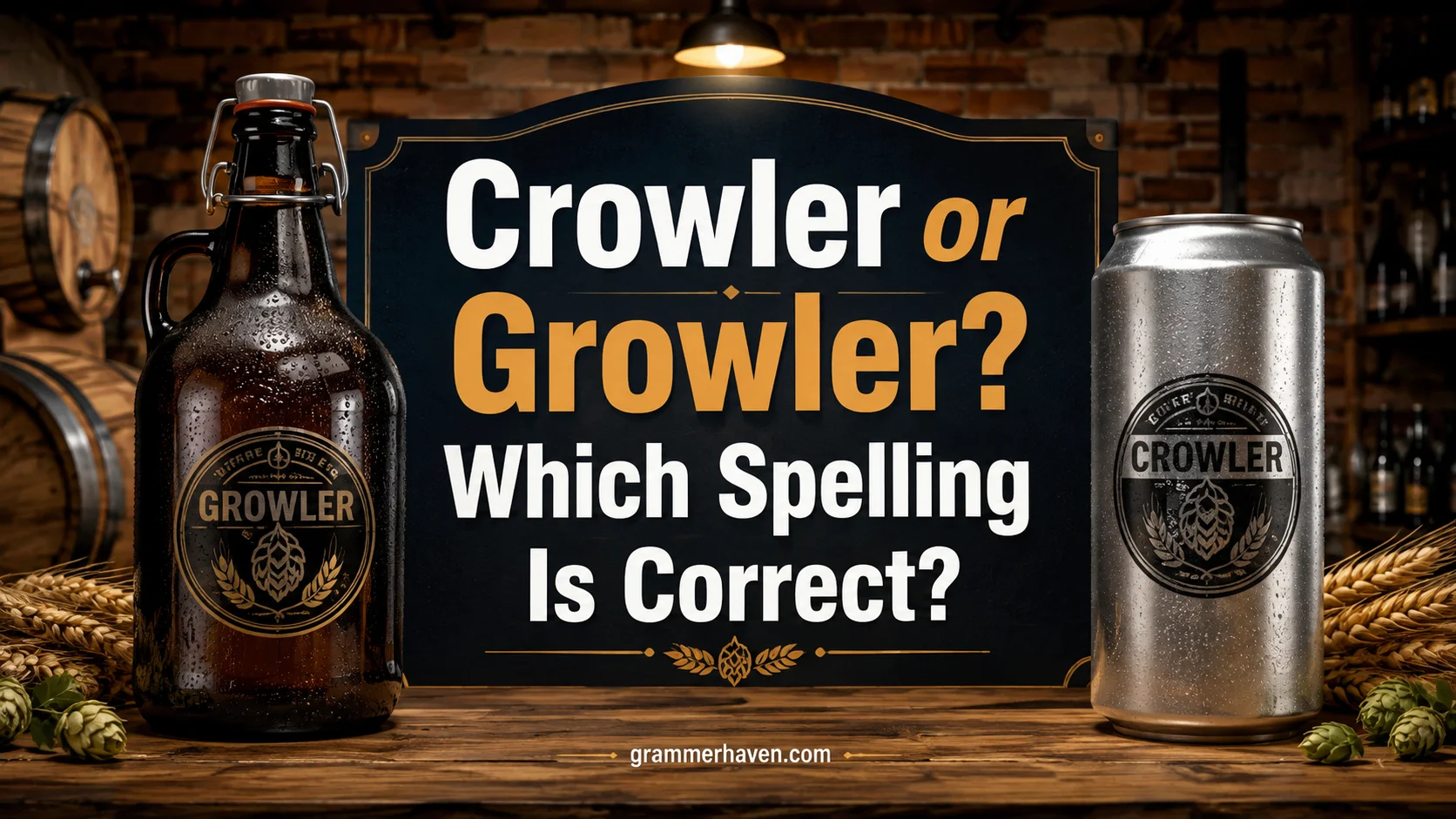
Crowler or Growler? Which Spelling Is Correct? A Crowler is a 32-ounce aluminum beer can, while a growler is a reusable container for draft beer.
A Crowler offers a sealed, portable way to package craft beer from brewery taps. Breweries fill, seal, and label cans to protect beer from light and support convenient transport.
A growler usually holds 64 ounces and comes in glass, steel, or ceramic. You can refill it at breweries, while a Crowler offers single-use convenience and easy recycling.
Crowler or Growler: What Is the Difference?
The simplest explanation is:
- A growler is a reusable jug, usually holding 64 ounces (1.89 liters) of beer.
- A crowler is a large 32-ounce (946 milliliters) aluminum can filled and sealed at a brewery.
Both containers allow breweries to sell draft beer for customers to enjoy outside the taproom. However, their designs create different experiences.
| Feature | Crowler | Growler |
| Container type | Aluminum can | Glass, stainless steel, ceramic, or other reusable material |
| Typical size | 32 ounces | 64 ounces |
| Reusable | Usually no | Yes |
| Seal method | Machine-sealed lid | Screw cap, flip-top, or stopper |
| Protection from light | Excellent | Depends on material |
| Portability | Very easy | Less convenient |
| Environmental impact | Recyclable but single-use | Better when reused repeatedly |
| Traditional beer culture | Newer | More traditional |
The confusion happens because both names describe the same basic purpose: transporting fresh draft beer from a brewery to another location.
The difference is how they accomplish that goal.
Is It Crowler or Growler? Which Spelling Is Correct?
Both spellings are correct.
However, they refer to different things.
What Is a Growler?
A growler is the original term. It describes a container used to carry beer from a brewery, pub, or taproom.
The word has been used in connection with beer containers for more than 100 years.
Traditional growlers were often metal pails used by workers who purchased beer from local breweries. Modern growlers evolved into sealed glass jugs and stainless-steel bottles.
Today, when someone says:
“I’m going to fill my growler at the brewery.”
They usually mean a reusable bottle or jug.
What Is a Crowler?
A crowler is a newer word created by combining:
- Can
- Growler
The term describes a large aluminum can that holds draft beer.
Unlike a traditional beer can that comes from a factory already filled, a crowler gets filled directly at a brewery. After filling, the brewery uses a canning machine to seal the lid.
A crowler gives customers the convenience of a can while allowing breweries to package fresh draft beer on demand.
What Is a Growler?
A growler is a reusable container designed to transport beer from a taproom or brewery.
Most growlers hold:
- 64 ounces (1.89 liters) — the standard size
- 32 ounces (946 milliliters) — smaller “half growlers”
- 128 ounces (3.78 liters) — larger versions
A standard 64-ounce growler holds roughly the equivalent of:
- Four 16-ounce pints
- Five and a third 12-ounce bottles
Types of Growlers
Growlers come in several materials, and each type has advantages.
Glass Growlers
Glass remains the most common traditional option.
Advantages:
- Affordable
- Easy to clean
- Widely accepted by breweries
- Classic appearance
Disadvantages:
- Breakable
- Allows light exposure unless stored carefully
- Does not maintain temperature for long
A clear glass growler sitting in sunlight can damage beer flavor because ultraviolet light reacts with compounds in hops.
This is why many beer experts recommend storing glass growlers in dark places.
Stainless Steel Growlers
Stainless-steel growlers have become increasingly popular.
Advantages:
- Durable
- Lightweight
- Protects beer from sunlight
- Some models provide insulation
High-quality insulated stainless-steel growlers can keep beer cold for many hours.
They are especially popular among:
- Hikers
- Campers
- Travelers
- Outdoor beer enthusiasts
Ceramic Growlers
Ceramic growlers are less common but have a unique appearance.
They offer:
- Strong protection from light
- A traditional handcrafted look
- Good insulation
However, they are heavier and often more expensive.
The History of Growlers
The history of the growler goes back to the late 1800s.
Before modern cans and bottles became common, people often bought fresh beer directly from breweries. Workers would bring metal containers to local breweries and take beer home.
These early containers became known as growlers.
The exact origin of the word remains debated, but several theories exist.
One popular explanation suggests that carbon dioxide escaping from partially sealed containers created a “growling” sound.
Another theory connects the term to workers “growling” about carrying heavy containers of beer home.
Regardless of the origin, the growler became an important part of local beer culture.
What Is a Crowler?
A crowler is a 32-ounce aluminum can filled directly at a brewery and sealed immediately using a canning machine.
Think of it as a giant beer can designed for fresh draft beer.
Instead of buying a traditional growler that you refill repeatedly, you purchase a sealed container that protects the beer until you open it.
The History of Crowlers
Crowlers are a much newer invention compared with growlers.
They became popular during the rise of the craft beer movement when breweries searched for better ways to package small amounts of specialty beer.
Traditional growlers had some challenges:
- They could break.
- They allowed more oxygen exposure.
- They required customers to clean and return containers.
- They were inconvenient for travel.
The crowler solved many of these problems.
By using aluminum cans, breweries could offer customers:
- Better portability
- Longer freshness
- Easier storage
- More reliable sealing
Today, many craft breweries offer crowlers alongside traditional growlers.
Crowler vs Growler: Size Comparison
Size is one of the biggest differences.
| Container | Volume | Equivalent |
| Standard beer can | 12 oz | One serving |
| Tallboy can | 16 oz | One large serving |
| Crowler | 32 oz | About two pints |
| Growler | 64 oz | About four pints |
A crowler is smaller than a traditional growler.
This makes it useful for people who want a smaller amount of beer without committing to a full 64-ounce container.
Crowler vs Growler: Which Keeps Beer Fresher?
Freshness is one of the most important factors when comparing crowlers and growlers.
Beer quality depends heavily on three enemies:
- Oxygen
- Light
- Heat
These factors can slowly change beer flavor.
Why Crowlers Often Stay Fresher
Crowlers have several advantages:
Airtight Seal
A brewery seals a crowler using professional canning equipment.
This creates a tight seal that reduces oxygen exposure.
Protection From Light
Aluminum blocks light completely.
This helps protect hop-heavy beers like:
- IPAs
- Pale ales
- Double IPAs
Better Travel Protection
A crowler can handle:
- Car trips
- Backpacks
- Coolers
- Outdoor activities
without worrying about broken glass.
Growler Freshness Challenges
Growlers can still provide excellent quality, especially when filled and stored properly.
However, freshness depends on:
- Filling technique
- Cap quality
- Cleanliness
- Storage temperature
A poorly cleaned growler can ruin even the best beer.
A growler with too much oxygen inside may lose carbonation quickly.
How Long Does Beer Last in a Crowler or Growler?
The exact lifespan depends on the beer style and storage conditions.
General guidelines:
| Container | Best Quality Period |
| Crowler | Often several weeks unopened when properly sealed |
| Growler | Usually best within a few days after filling |
| Opened container | Drink quickly for best flavor |
Once opened, both containers should be consumed quickly.
Carbonation escapes after opening, and flavors become less vibrant.
Crowler vs Growler: Environmental Impact
Environmental impact is more complicated than simply saying one is better.
Growler Advantages
Growlers can be reused hundreds of times.
A single stainless-steel growler used regularly can replace many disposable containers.
Benefits:
- Less packaging waste
- Long lifespan
- Lower waste over time
Crowler Advantages
Crowlers are made from aluminum, which is one of the most recyclable materials available.
Benefits:
- Lightweight
- Efficient transportation
- Easy recycling
However, because each crowler is typically used once, it creates more packaging waste than a reusable growler.
Which Is More Convenient: Crowler or Growler?
Convenience depends on your lifestyle.
Crowlers Are Better For:
- Road trips
- Camping
- Picnics
- Trying new beers
- One-time purchases
A crowler feels similar to carrying a large soda can.
You open it, pour your beer, recycle the container, and move on.
Growlers Are Better For:
- Regular brewery customers
- Beer collectors
- People who refill containers often
A growler becomes part of your routine.
You bring it back, refill it, and repeat.
Common Mistakes People Make With Crowlers and Growlers
Using Dirty Growlers
Beer residue creates bacteria and unpleasant flavors.
Always clean growlers immediately after use.
A dirty container can turn a great beer into something that tastes stale or sour.
Storing Beer in Warm Conditions
Heat damages beer.
Avoid leaving containers:
- In hot cars
- In direct sunlight
- Near heat sources
Cold storage helps preserve flavor.
Assuming Bigger Means Better
A 64-ounce growler is not always the right choice.
If you drink slowly, a crowler may make more sense because you finish it sooner while the beer remains fresh.
Why Do Breweries Use Crowlers?
Many breweries choose crowlers because they solve practical problems.
Benefits for Breweries:
- Easier inventory management
- Lower breakage risk
- Faster filling process
- Better customer convenience
- Longer shelf stability
Crowlers also allow breweries to sell limited-release beers without committing to large-scale packaging.
Real-World Example: Choosing Between a Crowler and Growler
Imagine two beer lovers.
Person A: The Weekend Explorer
They visit different breweries every weekend.
They enjoy trying new beers and taking them on camping trips.
A crowler makes sense because:
- It is easy to carry.
- It protects beer from sunlight.
- They do not need to store another container.
Person B: The Local Brewery Regular
They visit the same brewery every Friday.
They enjoy buying the same IPA every week.
A stainless-steel growler makes more sense because:
- They reuse it repeatedly.
- They reduce waste.
- They save money over time.
Crowler or Growler: Which One Should You Choose?
There is no universal winner.
The better choice depends on your priorities.
| Your Priority | Best Choice |
| Freshness | Crowler |
| Reusability | Growler |
| Outdoor activities | Crowler |
| Environmental responsibility | Growler |
| Convenience | Crowler |
| Traditional experience | Growler |
| Larger quantity | Growler |
Read also: Homey or Homie: Which Spelling Is Correct?
FAQs:
1. Is Crowler or Growler the correct spelling?
Both Crowler and growler are correct terms, but they describe different types of beer containers. A Crowler is usually an aluminium container or 32-ounce aluminum can, while a growler is commonly a refillable glass container.
2. What is a Crowler?
A Crowler is a large, sealed beer container designed to hold draft beer or Craft beer. It combines the convenience of a can with the larger capacity traditionally associated with a growler.
3. What is a growler?
A growler is a reusable container used to transport draft beer from a brewery or taproom. Traditional growlers are often made from glass, although steel and ceramic versions are also available.
4. Why is it called a Crowler?
The name Crowler is a mash-up of “can” and “growler.” The name reflects its design as a canned alternative to the traditional growler.
5. How much beer does a Crowler hold?
A common Crowler holds 32 ounces, although exact sizes can vary. This makes it larger than many standard 12 ounce cans and 16 ounce cans.
6. How much beer does a growler hold?
A standard growler commonly holds 64 ounces. A half growler, also known as a howler, usually holds around 32 ounces.
7. Is a Crowler better than a growler?
Neither option is always better. A Crowler offers convenient transport, a strong seal, and easy recycling. A growler offers refills and a reusable container. Your choice depends on your needs and preference.
8. Are Crowlers recyclable?
Yes. Most Crowlers use aluminum, which is widely recyclable. After you finish the beer, you can place the empty can in an appropriate recycling bin according to local recycling rules.
9. Do Crowlers keep beer fresh?
A properly filled and sealed Crowler can help protect beer from oxygen and UV light. Good sealing helps preserve carbonation, flavor, and freshness, although beer quality can change after opening.
10. Should I use a Crowler or growler?
Choose a Crowler when you want a convenient, sealed, portable can. Choose a growler when you prefer a refillable glass container and plan to return for regular refills at your local brewery or taproom.
Conclusion:
Crowler and growler are both correct spellings, but they refer to different beer packaging options. A growler is traditionally a reusable glass jug, while a Crowler is a sealed aluminum can designed for to-go beer. Knowing the difference helps you choose the right container for freshness, convenience, transport, and reuse. If you want a portable option that you can easily recycle, a Crowler is a practical choice. If you prefer a reusable container for regular brewery visits, a growler may suit you better.