
Eachother or Each Other is a common grammar question about spelling, forms, and the correct use in standard English. The confusion comes from the same sound, while the forms are spelled differently. The correct form is each other, written as two separate words with a space. Eachother is an incorrect, nonstandard spelling. The Cambridge Dictionary identifies each other as a reciprocal pronoun used for an action, feeling, or relationship between a person and another person.
The easy rule is simple: use each other as two separate words, not one word. The accepted form has no hyphen, while eachother remains a spelling mistake. This matters in everyday messages, where an error may look careless, as well as in academic, professional, and formal writing. Knowing the correct usage helps a student or casual writer follow the same rule, save time, and write correctly and confidently.
A pause or struggle over this phrase can be solved by remembering that each other shows a reciprocal connection between people and can describe a thing in suitable contexts. The word each and the word other stay separate. This simple distinction removes the mystery around the spelling and makes its usage easier to remember. In a blog or other writing, choosing the correct form keeps English clear and avoids the wrong form of treating the phrase as a single word.
Quick Answer: Eachother or Each Other?
Each other is correct. Eachother is incorrect in standard English.
| Form | Correct? | Example |
| each other | ✅ Yes | They respect each other. |
| eachother | ❌ No | They respect eachother. |
| each other’s | ✅ Yes | They respect each other’s opinions. |
| each others | ❌ No | They respect each others opinions. |
The easiest rule to remember is simple:
Write “each other” as two words.
Cambridge’s grammar guidance specifically says that each other should be written as two separate words and not as eachother. It also notes that the phrase doesn’t take a plural -s.
So if you’re writing an email, essay, article, report, text, or social media post, use each other.
What Does “Each Other” Mean?
Each other expresses a reciprocal relationship. In plain English, it means that people or things act toward one another.
Consider this sentence:
Sarah and Mike help each other.
The meaning isn’t simply that Sarah helps Mike. It means Sarah helps Mike, and Mike helps Sarah.
Think of it like a two-way street:
Sarah → Mike
Mike → Sarah
That two-way relationship is the heart of each other.
Cambridge Dictionary defines the phrase as referring to a situation in which each person in a group of two or more people does something to the others.
Examples of Reciprocal Meaning
- The friends trust each other.
- The two companies compete with each other.
- We should listen to each other.
- The children helped each other.
- They smiled at each other.
- The players congratulated each other after the game.
- The neighbors look after each other.
In every example, the relationship works in both directions.
That’s what makes each other different from an ordinary object pronoun.
Why Is “Eachother” Incorrect?
The confusion mostly comes from pronunciation.
When people speak naturally, each other can flow together so smoothly that it may sound almost like a single word. Fast speech creates this illusion all the time.
For example:
They really understand each other.
When spoken quickly, the boundary between each and other becomes less noticeable.
There’s another reason, too. English contains plenty of legitimate compounds. Words such as someone, everybody, nobody, and anything combine smaller words into a single spelling.
That pattern can make eachother look plausible.
It isn’t.
The accepted written form remains each other. The Blue Book of Grammar and Punctuation likewise identifies the two-word form as correct and explains that quick pronunciation can make the phrase sound like one word.
A Simple Memory Trick
Think of the phrase as:
each + other
If two people are involved, one person is doing something to the other, while the other person does the same thing back.
For example:
Alex and Jordan support each other.
You can mentally expand that to:
Alex supports Jordan, and Jordan supports Alex.
The space suddenly makes sense.
How to Use “Each Other” in a Sentence
The phrase usually appears after a verb or preposition because it functions as a reciprocal pronoun.
“Each Other” After a Verb
This is one of the most common patterns.
- They love each other.
- We understand each other.
- The students encouraged each other.
- The brothers teased each other.
- The teams respected each other.
Notice how the subject comes first:
They + verb + each other
For example:
They helped each other.
The subject they performs the action. Each other receives that reciprocal action.
“Each Other” After a Preposition
You can also use the phrase after a preposition.
Common combinations include:
- with each other
- to each other
- for each other
- about each other
- against each other
- from each other
- beside each other
Examples:
We talked to each other after class.
The two teams played against each other.
They learned a lot from each other.
The couple sat beside each other.
The coworkers often discuss ideas with each other.
These constructions are completely natural in American English.
Is “Each Other” a Pronoun?
Yes. More specifically, grammarians commonly describe each other as a reciprocal pronoun.
The term sounds technical, but the idea isn’t complicated.
A reciprocal pronoun shows that members of a group perform an action toward one another.
Compare these sentences:
They blamed themselves.
They blamed each other.
The difference is significant.
“Themselves” vs. “Each Other”
When people blame themselves, each person directs the action back at themselves.
When people blame each other, the people direct the action toward one another.
| Sentence | Meaning |
| They blamed themselves. | Each person blamed that same person. |
| They blamed each other. | Each person blamed the other people. |
| They congratulated themselves. | Each person congratulated themselves. |
| They congratulated each other. | Each person congratulated the others. |
This distinction becomes especially important in writing because changing one pronoun can completely change the meaning.
Can “Each Other” Refer to Three or More People?

Yes.
A common traditional grammar rule says that each other should refer to two people while one another should refer to three or more. Modern English doesn’t require that strict distinction.
Cambridge Dictionary explicitly explains that both each other and one another can refer to groups of two or more people. It also says there’s very little difference between the expressions and that each other is more common.
For example:
The three friends supported each other.
That’s perfectly standard.
You can also write:
The five members of the team encouraged each other.
Again, there’s no grammatical problem.
What About the Traditional Rule?
The traditional two-versus-three distinction still appears in some grammar advice. It’s not necessarily wrong as a style preference, but treating it as an absolute rule gives modern English a stricter boundary than actual usage supports.
Historical usage evidence also shows that writers have long used each other and one another with overlapping meanings. Grammarphobia, drawing on major usage references, notes that the supposed restriction has no solid foundation in actual English usage.
So you don’t need to count the people in your sentence before choosing each other.
Each Other vs. One Another
The phrases each other and one another are very close in meaning.
In most ordinary sentences, you can use either one without changing the basic meaning.
| Phrase | Meaning | Example |
| each other | Mutual or reciprocal action | They helped each other. |
| one another | Mutual or reciprocal action | They helped one another. |
Cambridge says the two expressions can normally appear in the same places and identifies each other as the more common option.
Which One Sounds More Natural?
In everyday American English, each other often sounds more conversational.
For example:
We should respect each other.
That sounds completely natural.
We should respect one another.
That’s also correct, although it can sound slightly more formal or deliberate depending on the context.
Neither form is inherently better. Choose the one that fits the tone of your sentence.
“Each Other” vs. “Each Other’s”
Here’s where the apostrophe matters.
Each other describes a reciprocal relationship:
They help each other.
Each other’s expresses possession:
They use each other’s computers.
The apostrophe plus s changes the grammatical function.
Examples of “Each Other’s”
- They borrowed each other’s books.
- The sisters wore each other’s jackets.
- The players admired each other’s skills.
- The coworkers read each other’s reports.
- The children knew each other’s names.
- The two companies studied each other’s strategies.
The possessive form means something belongs to, relates to, or is associated with the other members of the group.
Why “Each Others” Is Wrong
Don’t add a plain s to the end:
❌ They respect each others.
Instead, write:
✅ They respect each other.
If you mean possession, use:
✅ They respect each other’s opinions.
Cambridge specifically identifies each other’s as the possessive form and warns against treating each other as a plural expression.
How “Each Other’s” Works With Singular and Plural Nouns
Possessive constructions can become slightly tricky when the noun following each other’s is singular or plural.
Consider:
The two students borrowed each other’s book.
This can suggest that each student borrowed the other student’s book.
Now compare:
The two students borrowed each other’s books.
This suggests that each student borrowed multiple books belonging to the other student or students.
Context controls the exact interpretation.
Here’s another example:
The sisters visited each other’s homes.
This clearly suggests that the sisters visited the homes belonging to one another.
The key point is that each other’s is the possessive construction. The noun that follows it doesn’t determine whether each other itself needs an s.
Common “Eachother” and “Each Other” Mistakes
Small errors can create surprisingly awkward sentences. Fortunately, most are easy to fix.
Mistake 1: Writing “Eachother”
❌ They understand eachother.
Correct it to:
✅ They understand each other.
Rule: Keep the words separate.
Mistake 2: Writing “Each Others”
❌ The students helped each others.
Correct:
✅ The students helped each other.
Rule: Don’t pluralize the phrase.
Mistake 3: Forgetting the Apostrophe
❌ They borrowed each others books.
Correct:
✅ They borrowed each other’s books.
Rule: Use each other’s when you mean possession.
Mistake 4: Confusing “Each Other” With “Themselves”
❌ The two players congratulated themselves after the match.
If the players congratulated one another, write:
✅ The two players congratulated each other after the match.
The original sentence means each player congratulated themselves individually.
The corrected version describes mutual congratulations.
Mistake 5: Using “Each Other” as the Subject
Each other normally isn’t used as the subject of a sentence. Cambridge’s American Dictionary entry specifically notes that it isn’t used as the subject.
Instead of:
❌ Each other understood the problem.
Write:
✅ They understood each other.
The second version is clear, natural, and grammatically sound.
“Each Other” in Different Verb Tenses
The phrase doesn’t change when the verb tense changes.
Only the verb needs to change.
| Tense | Example |
| Present | They support each other. |
| Past | They supported each other. |
| Future | They will support each other. |
| Present perfect | They have supported each other. |
| Past perfect | They had supported each other. |
| Present continuous | They are supporting each other. |
This makes each other remarkably flexible.
For example:
They have known each other for years.
Here, the phrase refers to a relationship that began in the past and continues into the present.
You could also say:
They had known each other before they joined the same company.
The reciprocal meaning remains intact even though the tense changes.
“Each Other” With Things and Organizations
Although people often use each other for people, the phrase can also describe reciprocal relationships involving things, groups, organizations, or systems.
For example:
The two companies compete with each other.
The two machines depend on each other.
These systems interact with each other.
The two chemicals react with each other.
The important requirement isn’t that the subjects must be human.
Instead, the relationship must make sense as reciprocal.
If A affects B and B affects A, each other may fit naturally.
Case Study: Why the Pronoun Changes the Meaning
Consider two coworkers, Maya and Elena.
Sentence A
Maya and Elena criticized themselves.
This means Maya criticized Maya, while Elena criticized Elena.
Sentence B
Maya and Elena criticized each other.
Now the direction changes.
Maya criticized Elena, while Elena criticized Maya.
That tiny phrase creates an entirely different picture.
This is why reciprocal pronouns aren’t merely a spelling detail. They carry real grammatical meaning.
Eachother or Each Other: Correct and Incorrect Examples
The following examples cover the most common situations.
| Incorrect | Correct | Explanation |
| They love eachother. | They love each other. | Two words are required. |
| We help eachother. | We help each other. | Use the standard spelling. |
| They respect each others. | They respect each other. | Don’t add plural s. |
| They respect each others opinions. | They respect each other’s opinions. | Possession requires ‘s. |
| The friends talked to eachother. | The friends talked to each other. | The phrase remains separate. |
| They blamed themselves each other. | They blamed each other. | Use the reciprocal pronoun. |
| Each other understood the issue. | They understood each other. | Don’t use it as the subject. |
| The teams competed against eachother. | The teams competed against each other. | Keep the words separate. |
| We learn from eachother. | We learn from each other. | Correct spelling. |
| They borrowed each others books. | They borrowed each other’s books. | Possessive form needs an apostrophe. |
Is “Eachother” Ever Correct?
For modern standard English, no.
If you encounter eachother in an old text, historical document, or unusual source, that doesn’t make it the preferred spelling today. Historical English contains forms and spellings that don’t match current standard conventions.
For contemporary writing, the practical rule is straightforward:
Use “each other,” not “eachother.”
Even informal digital communication benefits from keeping the standard spelling when you’re writing for a broad audience.
Why Spellcheck Sometimes Causes Confusion
Modern writing tools can flag unusual word combinations, but spelling software isn’t a substitute for knowing how a phrase works.
If eachother appears as a single word, a grammar or spell-checking tool may identify it as an error. That’s useful, but understanding the reason behind the correction is better.
Once you know that each other functions as a reciprocal pronoun, the spelling becomes easier to remember.
You aren’t memorizing an arbitrary space.
You’re remembering a grammatical phrase.
American English vs. British English: Is There a Difference?
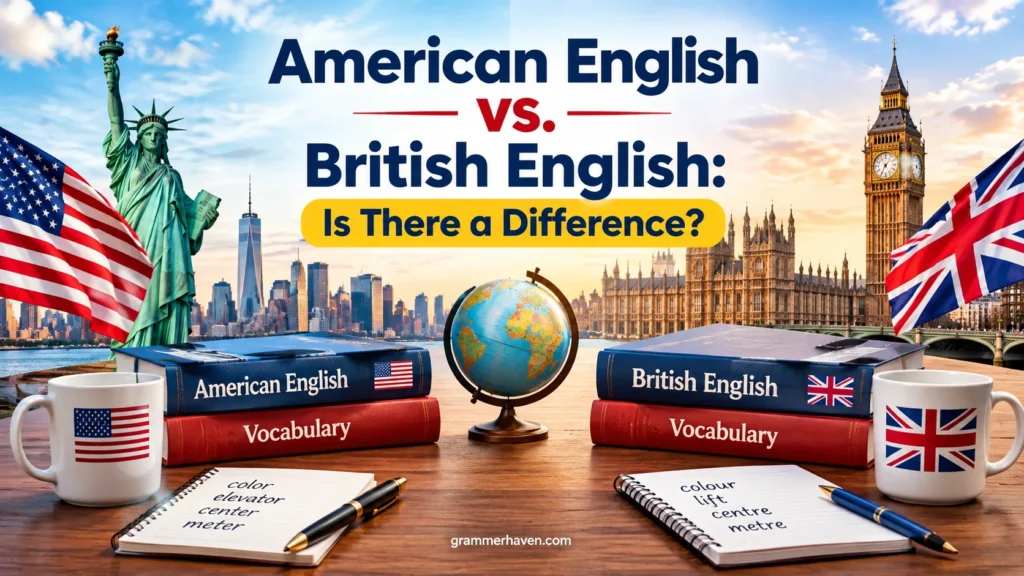
There isn’t a spelling difference here.
Both American and British English use:
each other
Neither standard variety changes the phrase to eachother.
So this isn’t like:
- color vs. colour
- favorite vs. favourite
- center vs. centre
The correct form stays the same:
| English variety | Correct spelling |
| American English | each other |
| British English | each other |
| Canadian English | each other |
| Australian English | each other |
If you’re writing for an American audience, each other is the form to use.
How to Remember the Correct Spelling
A good memory trick should make sense rather than force you to memorize another rule.
Try this:
Think “each + other”
Imagine two people standing across from one another.
Person A → Person B
Person B → Person A
Each person acts toward the other.
That gives you:
each + other
Another useful trick is to remember that each other isn’t a single word like everybody. It’s a two-word reciprocal expression.
The Five-Second Check
Before publishing, ask:
- Am I describing a mutual action?
- Did I write each other as two words?
- Am I expressing possession?
- If so, did we use each other’s?
- Did I accidentally write each others?
If you can answer those five questions, you’re unlikely to make the common errors.
How to Proofread “Each Other” in Your Writing
When editing a long article or document, use your word processor’s Find feature.
Search for:
eachother
If you find it, check the sentence and change it to:
each other
Then search for:
each others
Some of those instances may actually need:
each other
Others may need:
each other’s
For example:
❌ The teammates encouraged each others.
becomes:
✅ The teammates encouraged each other.
But:
❌ The teammates admired each others skills.
becomes:
✅ The teammates admired each other’s skills.
That quick search can catch several mistakes before publication.
Common Expressions With “Each Other”
You’ll encounter each other in many familiar phrases.
Made for Each Other
They seem to be made for each other.
This idiom means two people seem exceptionally well suited to one another.
Know Each Other
We’ve known each other since college.
This describes familiarity or a relationship between people.
Help Each Other
Good teammates help each other.
The phrase emphasizes mutual support.
Understand Each Other
They understand each other surprisingly well.
This can describe emotional, intellectual, or practical understanding.
Talk to Each Other
The two managers need to talk to each other.
The phrase highlights communication between the people involved.
These expressions sound natural because reciprocal relationships appear constantly in everyday language.
See also: Each or Every: When Should You Use Each One?
FAQs:
Is “eachother” one word?
No. Each other is written as two separate words in standard English. Cambridge’s grammar guidance specifically identifies eachother as an incorrect form.
Is “each other” grammatically correct?
Yes. Each other is a standard reciprocal pronoun used to describe mutual actions or relationships.
Is “each other” one word or two?
It’s two words.
✅ each other
Not:
❌ eachother
Can “each other” refer to three or more people?
Yes. Modern English uses each other for groups of two or more people. Cambridge explicitly supports this usage.
Is “each others” correct?
No.
Use:
each other
Or, when expressing possession:
each other’s
Is “each other’s” correct?
Yes. It’s the possessive form.
For example:
They borrowed each other’s notes.
What’s the difference between “each other” and “one another”?
Both normally express reciprocal relationships. Modern English uses them in many of the same contexts, and each other is more common.
Can “each other” refer to things?
Yes. It can describe reciprocal relationships involving companies, systems, machines, objects, and other nonhuman entities when the context supports mutual action.
Can “each other” be the subject of a sentence?
Normally, no. Use a pronoun such as they, we, or the two teams as the subject.
Is “eachother” acceptable in formal writing?
No. Use each other in formal, academic, professional, and edited writing.
Conclusion:
Each other is the correct standard English form, while eachother is a nonstandard spelling. Remember to write the phrase as two separate words with a space and no hyphen. Once you learn this simple rule, you can use each other correctly and confidently in everyday, academic, professional, and formal writing.













