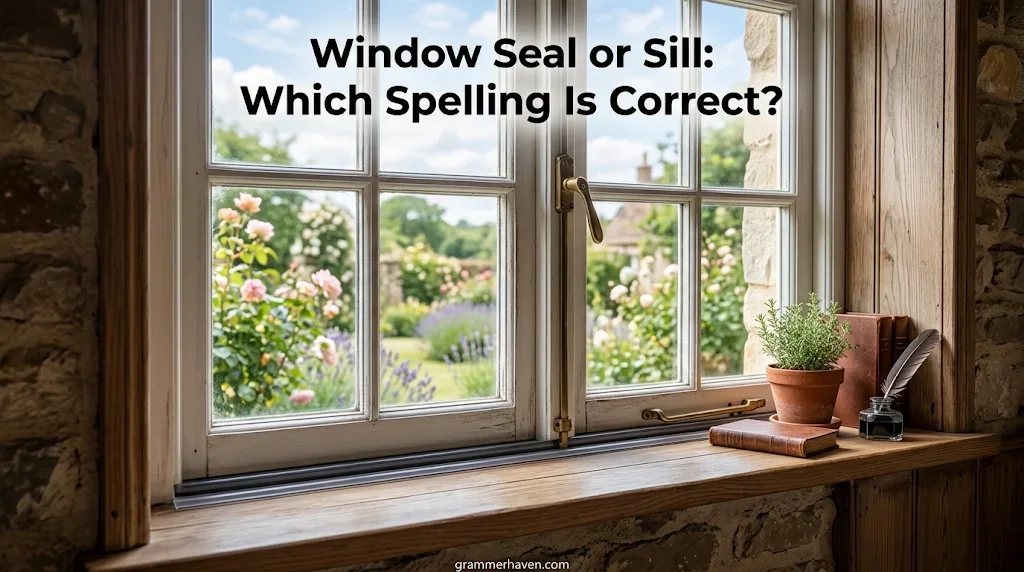
Window Seal or Sill – Which Spelling Is Correct? explains why these similar terms create confusion and helps you choose the word in English usage. Many homeowners experience confusion because Window Seal and Sill sound similar in English, but their meaning, usage, and function are completely different. In daily conversation, people often mix these terms while talking about a window. The correct word depends on the purpose. A window sill is a visible physical feature that works as a ledge, shelf, or base at the bottom of the window. It is the window part where you can place plants, decorations, and other items. The sill belongs to the window structure and remains a noticeable part of the windows.
A window seal refers to the sealing process or material used for making tight and closing gaps around the window. Its main job is to prevent drafts and stop water entering the room. A failing seal can create a foggy window, water collecting, or a cold draft around the frame. A damaged seal and a damaged sill require different solutions, and misunderstanding them may lead to fixing the wrong thing, which can end up costing hundreds or even thousands of dollars. The seal provides protection and improves performance, while the sill is a physical part of the structure.
From my experience teaching learners, I’ve focused on clarifying this distinction because it improves accuracy, identification, and recognition of window issues. Knowing the correct spelling and using each term in the right context supports professional conversations, casual conversations, construction, housing, and DIY guides. This in-depth guide provides examples as an easy reference for writers who want better writing, reading, and daily use skills while minimizing errors. By grasping definitions and applying terms correctly, you gain clarity, stronger communication, and more confidence.
Window Seal or Sill – Which Spelling Is Correct? The Simple Answer First
Let’s clear the confusion right away.
- Window sill = the horizontal ledge at the bottom of a window
- Window seal = the barrier that blocks air, water, and dust around a window
They are both correct spellings, but they describe different things.
So when you ask “window seal or sill – which spelling is correct?”, the real answer is:
👉 Both are correct words, but they are not interchangeable.
Think of it like this:
- A sill sits
- A seal stops leaks
That simple idea will already save you from most confusion.
What Is a Window Sill? (Meaning, Function, and Real Use)
A window sill is the bottom horizontal surface of a window opening. It acts like a small shelf that supports the window structure and directs water away from the wall.
You’ll see it inside homes, outside buildings, and sometimes even as a decorative feature.
Main functions of a window sill
A sill does more than just “sit under the window.” It plays several important roles:
- Supports the window frame structure
- Helps direct rainwater away from walls
- Prevents water from seeping into masonry
- Adds interior design value (plants, décor, seating)
In older homes, wide stone sills often act like mini shelves. In modern apartments, PVC or engineered wood sills dominate due to cost and durability.
Common window sill materials
Different homes use different sill materials based on climate, budget, and design.
| Material | Durability | Cost Range (USD equivalent) | Notes |
| Wood | Medium | $15–$50 per linear foot | Warm look but prone to rot |
| PVC | High | $10–$40 per linear foot | Low maintenance, waterproof |
| Stone (granite/marble) | Very High | $40–$120 per linear foot | Premium, long-lasting |
| Concrete | Very High | $20–$60 per linear foot | Common in commercial buildings |
Wood remains popular in residential interiors. Stone dominates luxury builds. PVC has become the go-to choice for budget-friendly construction.
Interior vs exterior window sill
These two often get mixed up, but they serve different roles.
- Interior sill
- Decorative
- Often used for plants or décor
- Usually smoother and finished
- Exterior sill
- Weather protection
- Sloped design to drain water
- Built to resist rain, sun, and temperature changes
A well-built exterior sill protects the structure underneath. Without it, water damage spreads quickly into walls.
What Is a Window Seal? (Meaning, Function, and Use)
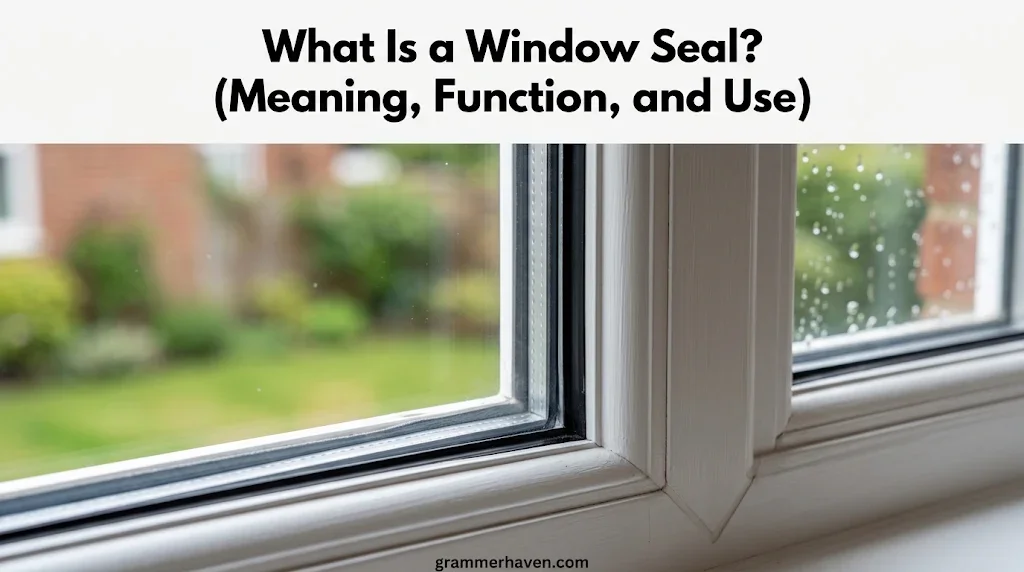
A window seal is not a physical ledge. It is a protective barrier that blocks air, water, dust, and noise from entering or escaping through gaps in a window system.
Unlike a sill, you often don’t see a seal clearly. It hides in the joints.
Main functions of a window seal
A proper seal improves comfort and efficiency in your home.
- Blocks cold or hot air leakage
- Prevents water infiltration during rain
- Reduces outside noise
- Improves energy efficiency
- Protects window frames from moisture damage
If your home feels drafty, the seal is often the first thing to fail.
Types of window seals
Window sealing comes in different forms depending on the installation.
- Rubber weather stripping
- Flexible material
- Used around movable window parts
- Silicone sealant (caulking)
- Fills gaps between frame and wall
- Highly water-resistant
- Foam seals
- Compressible material
- Used for insulation in gaps
- Double glazing seals
- Found between glass panes
- Prevents condensation and fogging
Each type plays a specific role. A broken seal usually shows up as drafts or condensation inside glass panels.
Why People Confuse “Window Seal or Sill”
This confusion happens more often than you’d expect. Several real-world reasons drive it.
1. Similar pronunciation
“Seal” and “sill” sound almost identical in casual speech. That alone creates misunderstanding.
2. DIY content misuse
Many online guides misuse the terms. One article might call a sill a seal, and the next does the opposite.
3. Auto-correct errors
Typing quickly on mobile often turns “sill” into “seal” or vice versa.
4. Lack of construction knowledge
Most homeowners never learn technical window terminology. So they rely on guesswork.
The result? People search the wrong term, buy wrong parts, and misdiagnose problems.
Window Seal vs Sill – Visual Comparison Table
Let’s make this crystal clear.
| Feature | Window Sill | Window Seal |
| What it is | Physical ledge | Flexible barrier |
| Location | Bottom of window opening | Around frame or glass edges |
| Visibility | Always visible | Often hidden |
| Main purpose | Support + drainage | Insulation + protection |
| Materials | Wood, stone, PVC, concrete | Rubber, silicone, foam |
| Replacement frequency | Low | Medium to high |
| Failure signs | Cracks, rot, damage | Drafts, leaks, condensation |
Once you see this table, the difference becomes obvious.
Common Mistakes Homeowners Make
Many people lose time and money because they confuse these two terms.
Mistake 1: Buying the wrong repair materials
Someone sees water leaking and buys sill replacement kits instead of sealant. That doesn’t fix anything.
Mistake 2: Misdiagnosing drafts
A draft usually comes from a failed seal, not a damaged sill.
Mistake 3: Calling the wrong contractor
Carpenters fix sills. Seal issues often need glazing or insulation specialists.
Mistake 4: Ignoring early warning signs
Small seal gaps grow over time. Early repair costs almost nothing compared to full replacement.
How to Tell If You Need a Window Sill Repair or Seal Repair

You don’t need technical skills. You just need to observe closely.
Signs of sill damage
- Soft or rotting wood under the window
- Visible cracks in stone or concrete
- Water pooling on the interior ledge
- Paint peeling near the base
These issues point to structural or moisture damage in the sill itself.
Signs of seal failure
- Cold air coming through window edges
- Fog or condensation between glass panes
- Rising electricity bills from heating or cooling loss
- Noticeable noise from outside
Seal problems directly affect comfort and energy efficiency.
Case Study: Misdiagnosed Window Problem That Cost 3× More
A homeowner in a mid-sized urban apartment noticed water stains near the window.
They assumed the window sill had failed and replaced the entire sill structure. The cost reached around $180–$300 per window.
However, the real issue was a broken silicone window seal.
- Proper seal repair would have cost: $25–$60
- Incorrect sill replacement cost: 3–5 times higher
After the repair, the leak continued until a technician fixed the seal properly.
Lesson learned
Never assume structural damage before checking the seal condition.
A quick inspection could have saved hundreds of dollars.
Practical Examples in Real Home Improvement Scenarios
Let’s break down how this plays out in real life.
Scenario 1: Replacing a broken window sill
You notice:
- Cracked marble under your window
- Sharp edges forming
- Water collecting after rain
👉 Solution: Replace or repair sill material
Scenario 2: Resealing a drafty window
You feel:
- Cold air entering from edges
- Noise coming through gaps
👉 Solution: Apply silicone sealant or replace weather stripping
Scenario 3: Misdiagnosed issue
You think:
- “My window sill is leaking”
But actually:
- Air leaks come from frame gaps, not sill damage
👉 Result: Wrong repair until corrected by inspection
Quick Memory Trick: Never Confuse Them Again
Here’s a simple trick that actually works:
👉 “Sill sits, seal stops.”
- Sill = solid surface you can sit things on
- Seal = invisible barrier that stops leaks
Repeat it once or twice and it sticks.
See also: End Run Idiom: Meaning, Example & Usage Guide
FAQs:
1. Is it called a window seal or window sill?
The correct term depends on what you are describing. A window sill is the ledge at the bottom of a window, while a window seal refers to the material that prevents air and water from entering through gaps.
2. What is the purpose of a window sill?
A window sill provides a base or ledge at the bottom of a window. It can support plants, decorations, and other items while also being part of the window structure.
3. What does a window seal do?
A window seal helps keep a window airtight and prevents drafts, moisture, and water from entering the room. A damaged seal can cause foggy windows and water issues.
4. Why do people confuse window seal and sill?
People often confuse these words because they have identical sounds when spoken. However, their meanings, functions, and uses are different.
5. Can a damaged window sill and damaged window seal cause the same problems?
No. A damaged window seal usually causes drafts, leaks, or moisture problems, while a damaged window sill affects the physical structure and appearance of the window area.
Conclusion:
Understanding the difference between Window Seal or Sill – Which Spelling Is Correct? helps you avoid common mistakes in writing, conversation, and home improvement discussions. A window sill is the physical ledge at the bottom of a window, while a window seal is the material or system that closes gaps and protects against drafts and water. Although these terms sound similar, their meanings and functions are completely different. Using the correct term improves clarity, communication, and accuracy, especially when discussing construction, repairs, or DIY projects.
Latest Post:
- Result In or Result To: Which Is Correct? (With Examples)
- A Dime a Dozen: Meaning, Definition, Origin and Real-Life Usage
- Hooplehead Definition, Meaning, Usage and Examples
- Whole vs Hole: What’s the Difference?
- Acumen vs Acuity vs Acuteness: What’s the Difference?