From My End or From My Side: Meaning, Differences & Correct Usage

From My End or From My Side describes two similar English phrases whose meanings depend on context, responsibility, and the message you want to share. Understanding these English phrases helps you make better language choices in everyday conversations, professional communication, and conversational English. The phrase from my end usually refers to your individual responsibility, assigned ...
Read more
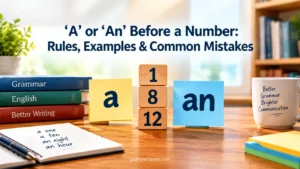
‘A’ or ‘An’ Before a Number: Rules, Examples & Common Mistakes
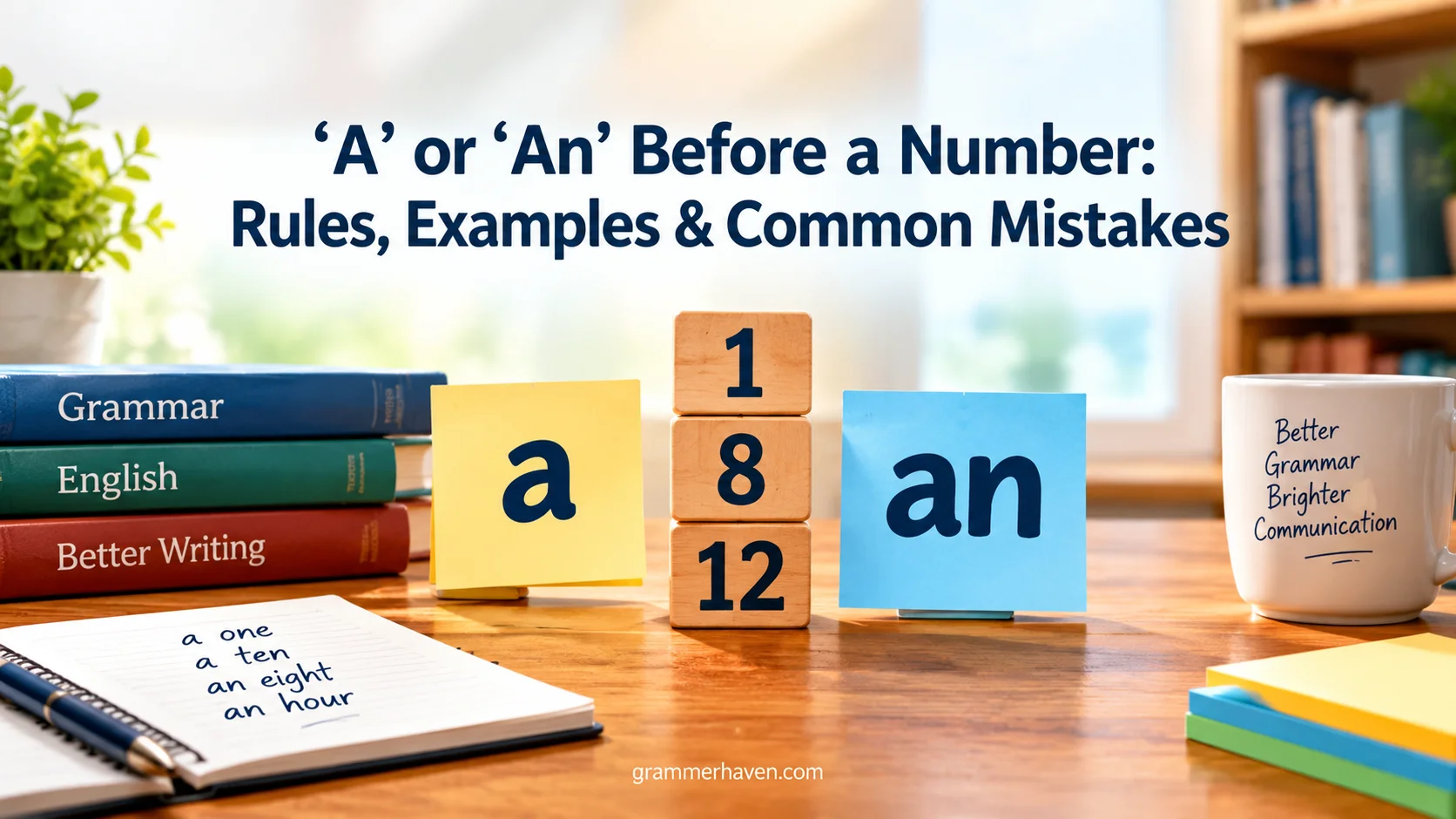
‘A’ or ‘An’ Before a Number depends on the first sound you hear, not the first digit you see, when choosing the correct article in English writing. The simple rule depends on pronunciation, spoken English, and the initial sound of the number. Write an eight-year-old child because eight begins with a vowel sound. Write a ...
Read more
Verklempt Meaning: Definition, Origin, Examples & How to Use It
The Verklempt Meaning describes feeling so emotional that you struggle to speak or cannot find the right words. This familiar expression in American English comes from Yiddish and describes feelings that run so deep that speaking becomes difficult. Happiness, sadness, gratitude, and other powerful emotions can leave you temporarily speechless. The word helps you describe ...
Read more
Collaborate vs. Corroborate: Meaning, Differences and Examples
**Collaborate vs. Corroborate** explains why people confuse two similar words that describe different actions: teamwork and proof. Many people mix up collaborate and corroborate because the words sound similar and look similar. Their meanings differ. Collaborate means working together with others on a project or task. It involves teamwork, joining forces, and forming a partnership ...
Read more
Sole vs. Soul: Meaning, Differences, Examples and Correct Usage
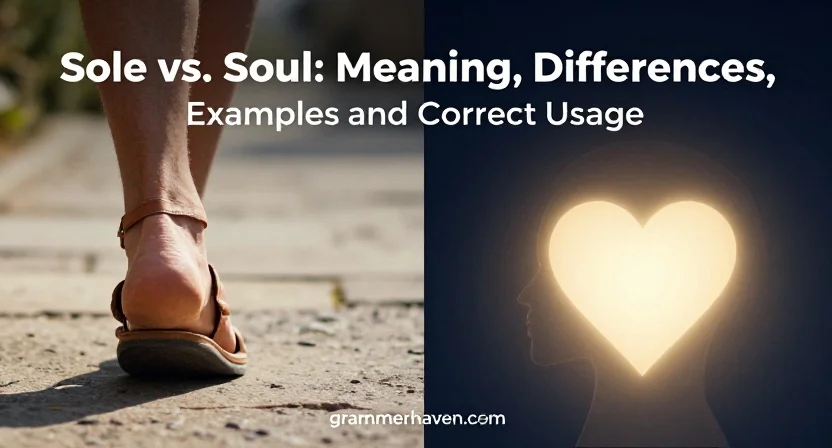
Sole vs. Soul can confuse English writers because both words sound alike in standard American English but have entirely different meanings. Sole refers to the bottom part of your foot, a shoe’s bottom, a type of fish, or the sole owner of a business. Soul describes a person’s essence, inner being, feelings, or character. The ...
Read more
What Is Forte? Meaning, Pronunciation, Origin & Examples
What Is Forte? It describes a person’s strongest skill, natural talent, or ability to perform something well. Your forte might be cooking, writing, public speaking, or another specialized skill. It reflects your strengths, expertise, competence, mastery, aptitude, and proficiency. For example, excellent meals may show your cooking skills, while clear writing demonstrates writing skills. A ...
Read more
More Smart or Smarter: Which Is Correct? Meaning, Grammar & Examples
The phrase More Smart or Smarter often confuses English learners when comparing intelligence, people, or ideas. The correct form is smarter because smart is a one-syllable adjective that usually takes the -er suffix. This rule helps improve grammar understanding, word choice, sentence construction, and everyday communication. The difference between more smart and smarter depends on ...
Read more
Into or Onto: Meaning, Differences and Correct Usage
Into or Onto can confuse English learners because these prepositions describe movement, direction, and location but express different relationships between objects and destinations. English has many small words with important meanings. Prepositions such as “into” and “onto” help explain movement and position. Into describes entering the inside of a place or changing into a new ...
Read more
Minoot vs. Minute: Which Spelling Is Correct?
The **Minoot vs. Minute:** spelling difference confuses English learners and native speakers because one familiar word has two meanings and different sounds. English spelling can confuse readers when a familiar word sounds different in another context. The Minoot vs. Minute debate involves pronunciation, spelling confusion, and contextual meaning. Someone might describe a tiny mark as ...
Read more
Role Call or Roll Call: Meaning, Differences and Correct Usage
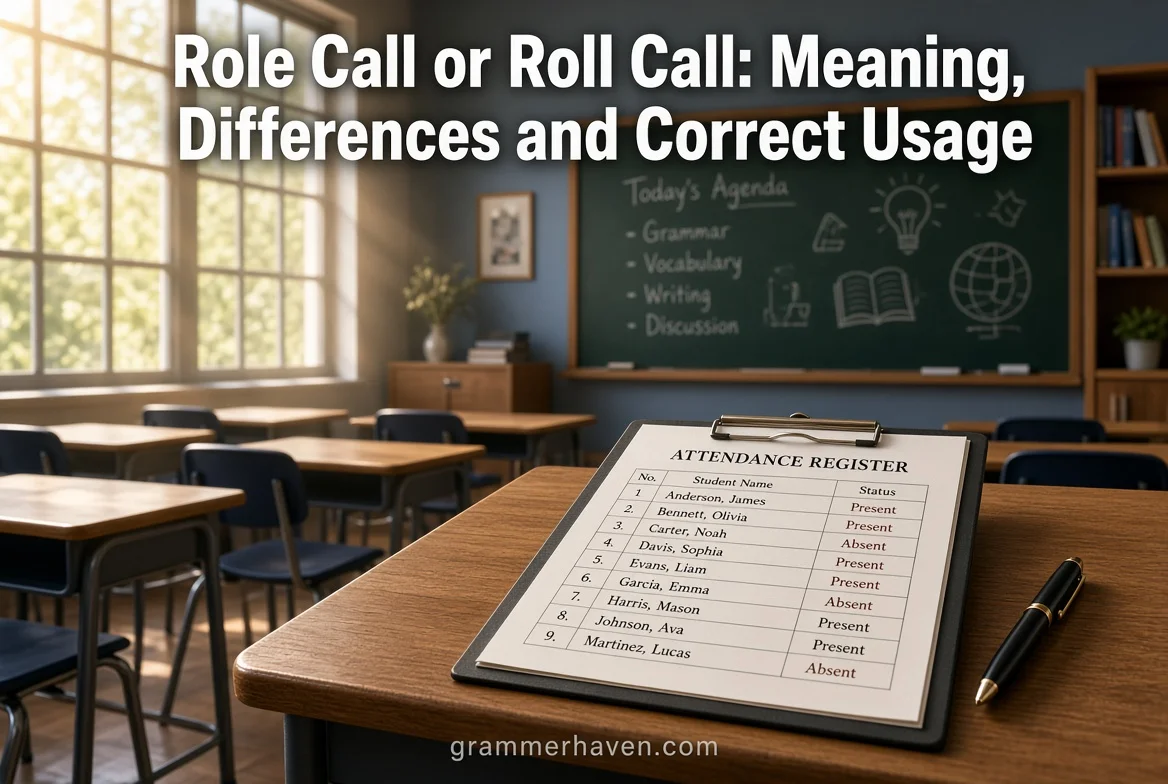
Role Call or Roll Call can confuse English learners because both expressions sound alike but have different meanings in standard American English. These common mix-ups affect native speakers, school assignments, workplace emails, meeting notes, and everyday messages. Understanding context, pronunciation, and word meanings helps you choose the correct phrase and avoid spelling confusion. The word ...
Read more