A Big Ask: Meaning, Origin, Examples and How to Use This Idiom
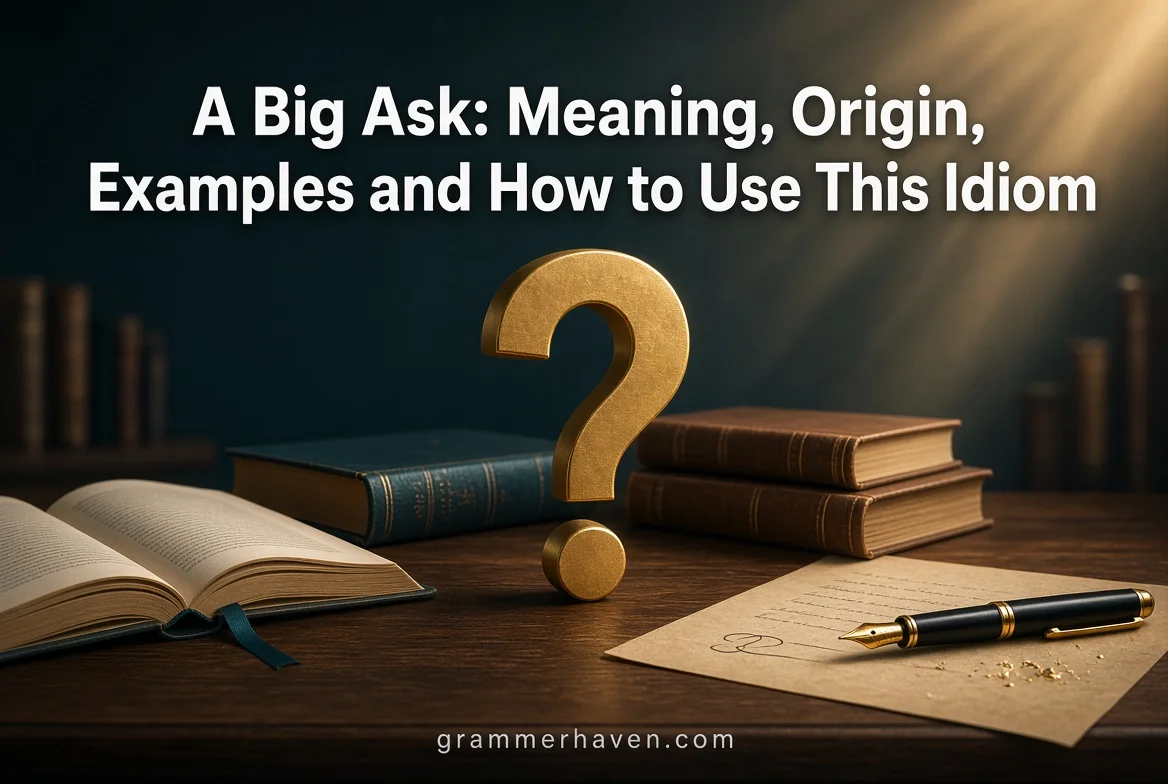
A Big Ask is a common English expression for a request that needs considerable time, effort, money, or sacrifice. This idiom describes something difficult, demanding, or challenging to complete. You might hear it at work, during family conversations, or in other social interactions when someone faces an ambitious challenge. A coworker who asks you to ...
Read more
Bunk vs. Debunk: Meaning, Differences and Examples
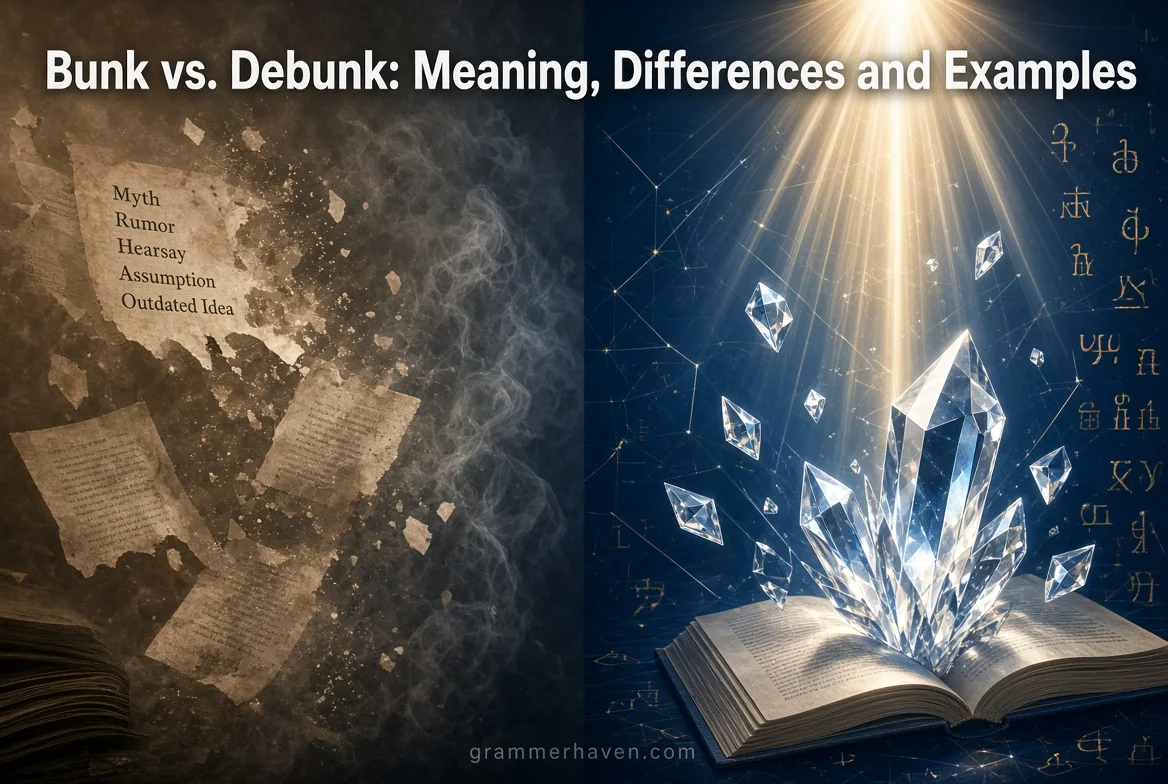
Bunk vs. Debunk explains how bunk means nonsense, while debunk means exposing false claims with facts, evidence, and clear reasoning in everyday English. Bunk is a noun that describes nonsense, unsupported ideas, baseless rumors, and claims that lack reliable evidence. It can also refer to a narrow bed or a bed in a bunk bed, ...
Read more
Ardor or Ardour: Which Spelling Is Correct?
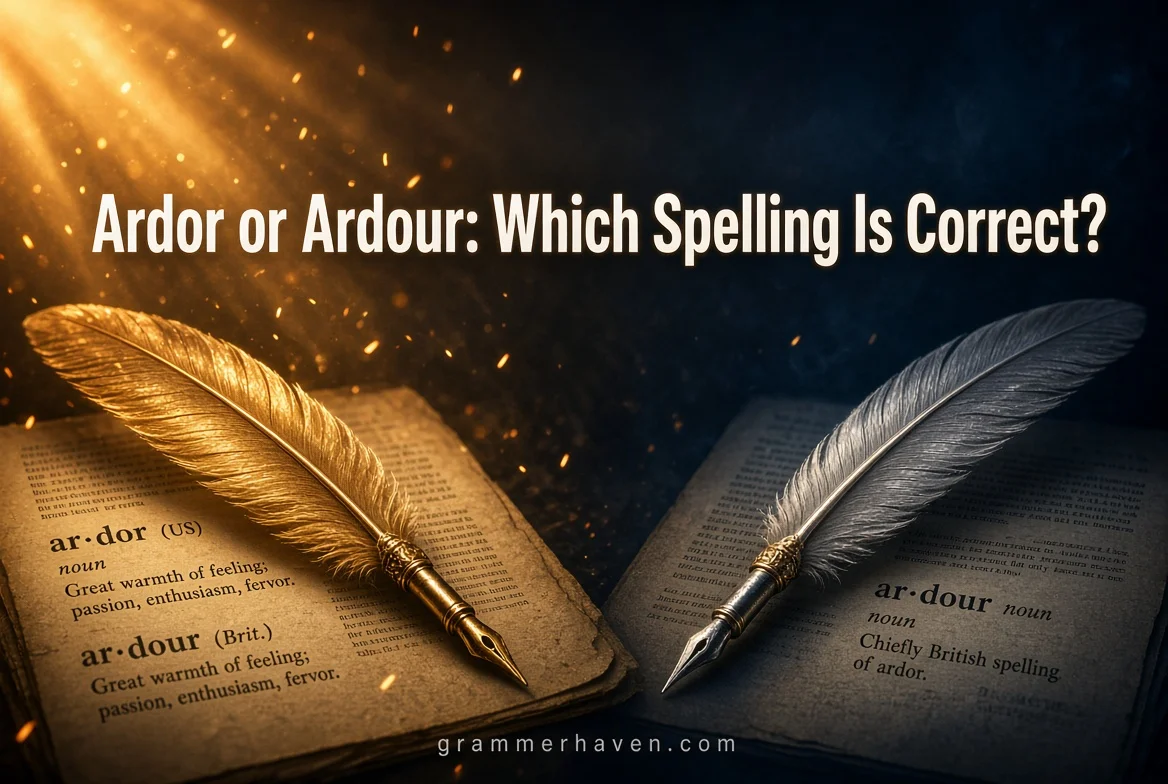
Ardor or Ardour can confuse English learners because both spellings describe the same passion or enthusiasm for something you care about. The word comes from the Latin ardere, meaning to burn, and suggests a burning desire that inspires action. Ardor is the standard spelling in American English, while ardour is preferred in British English. Both ...
Read more
Creek vs. Creak: Meaning, Differences and Examples
Creek vs. Creak explains why two English homophones sound identical but have different spellings, meanings, and uses. In standard American English, pronunciation alone cannot distinguish these words. A creek is a natural waterway, such as a small stream or a narrow inlet with shallow water connected to the sea. An inlet from the sea can ...
Read more
No Thank You or No, Thank You: Which Is Correct?
No Thank You or No, Thank You depends on punctuation, as a comma separates a polite refusal from an expression of gratitude in standard written English. The comma is a tiny mark with a big punch in message reception. It improves sentence structure, helps readers understand your thoughts, and adds clarity to everyday messages, emails, ...
Read more
Mastering the Art of Referring to the Last Two Items in English
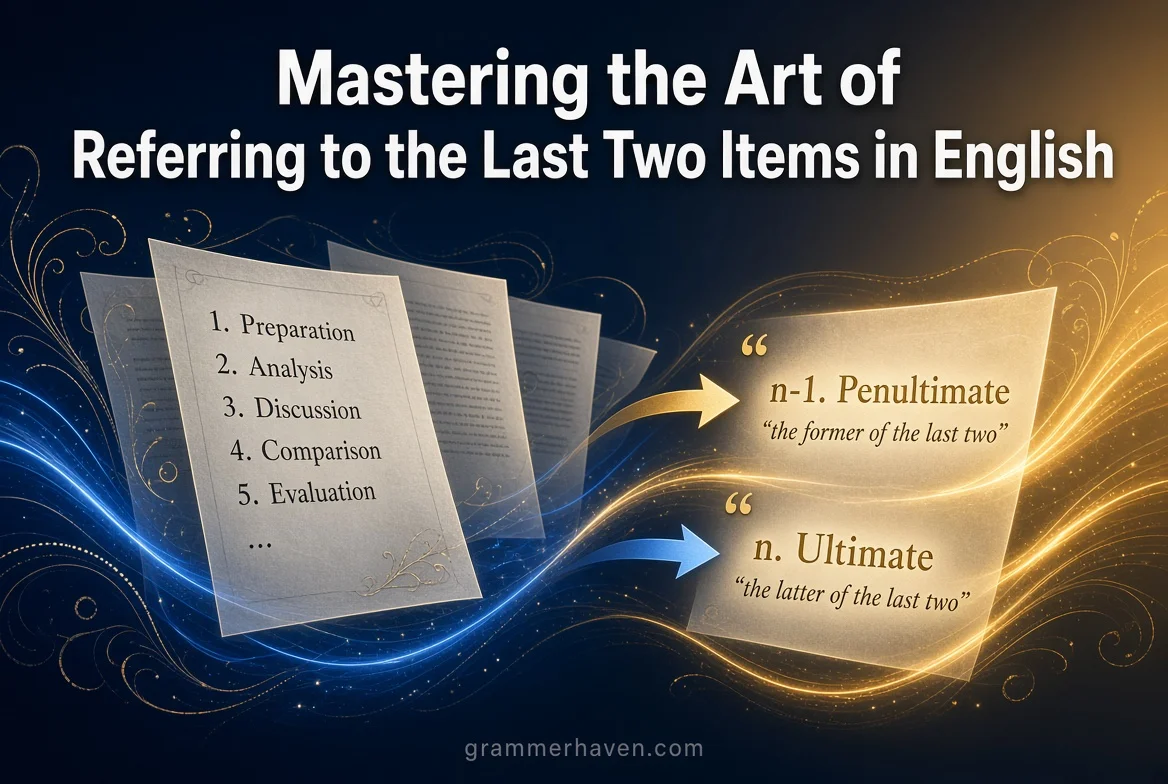
The Last Two helps you refer to the final pair in a list without repeating names, keeping your writing clear and professional. Have you ever written a list and struggled to refer to the final two items without repeating their names? Choosing the right expression makes your writing clearer, smoother, and more professional. In English, ...
Read more
Delicious or “Dilicious”: Which Spelling Is Correct?
Delicious or “Dilicious” can cause spelling confusion because the spoken form may sound familiar, but delicious is the correct spelling in English. Delicious is the recognized word and standard adjective for food that tastes very good or has a pleasing flavor. Dilicious is an incorrect and common misspelling. You can use this English adjective for ...
Read more
Ladder vs. Latter: Meaning, Difference & How to Use Each Correctly
Ladder vs. Latter can confuse readers because the words have an important spelling difference but look almost identical on paper. They have completely different meanings: a ladder is a structure with rungs used to climb, while latter identifies the second of two people or the second of two things already mentioned. A staircase and a ...
Read more
Favourite or Favorite: Which Spelling Is Correct?
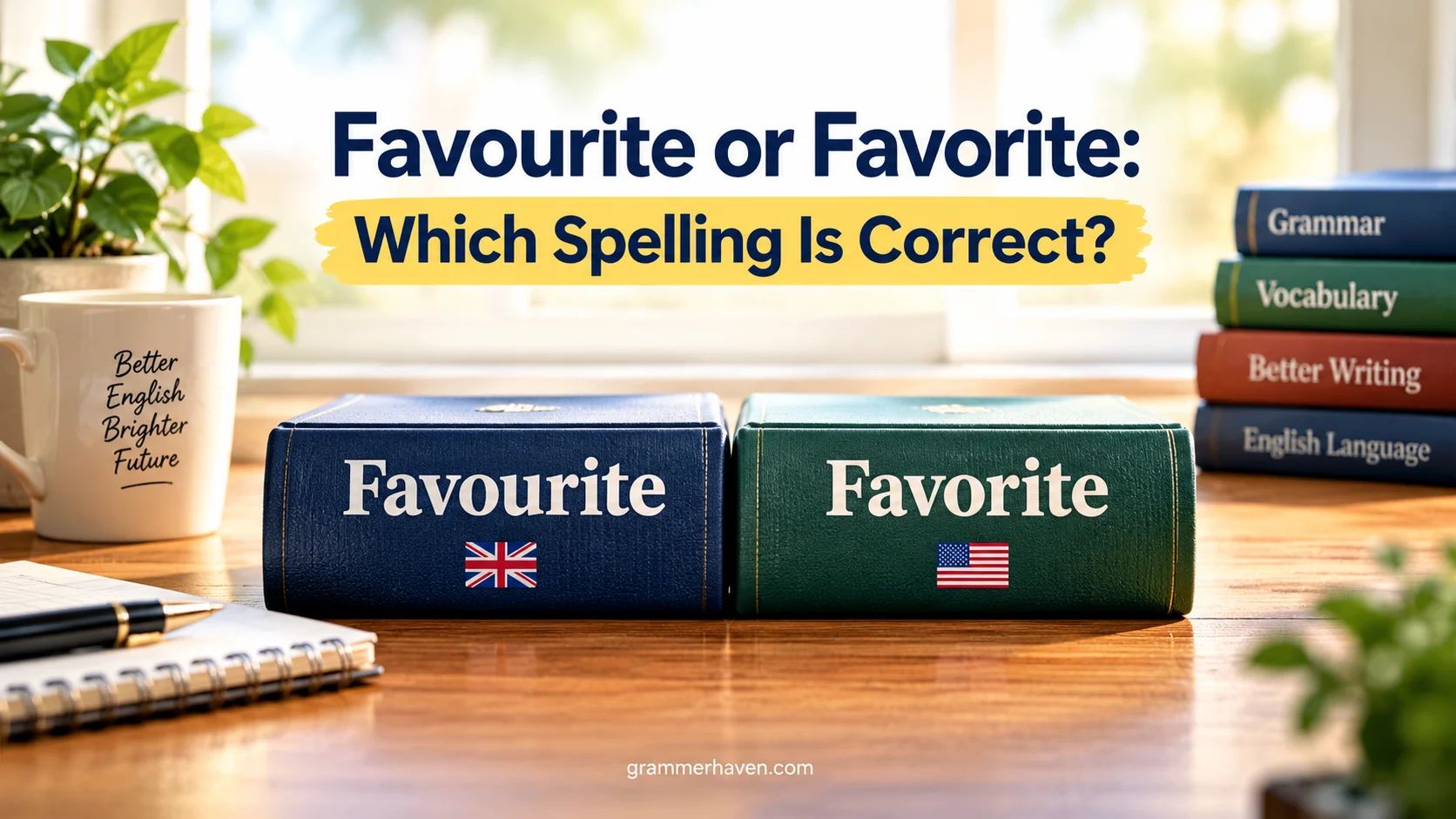
Favourite or Favorite have the same meaning, and their spelling shows regional usage in British English and American English. Both forms describe things you love, loved, or liked the most. The main difference is the spelling difference between these English varieties. Favourite appears in the UK and United Kingdom, while favorite follows common American English ...
Read more
Gaudy vs. Gawdy: Which Spelling Is Correct?
Gaudy vs. Gawdy shows why Gaudy is the legitimate English word, while Gawdy is a common misspelling in modern English today. Gaudy has the standard spelling and works as an adjective for something extravagantly bright, showy, tasteless, excessively bright, ornate, or flashy in appearance. A gaudy necklace or brightly colored outfit at a party can ...
Read more