At the Same Day or On the Same Day? The Correct Phrase
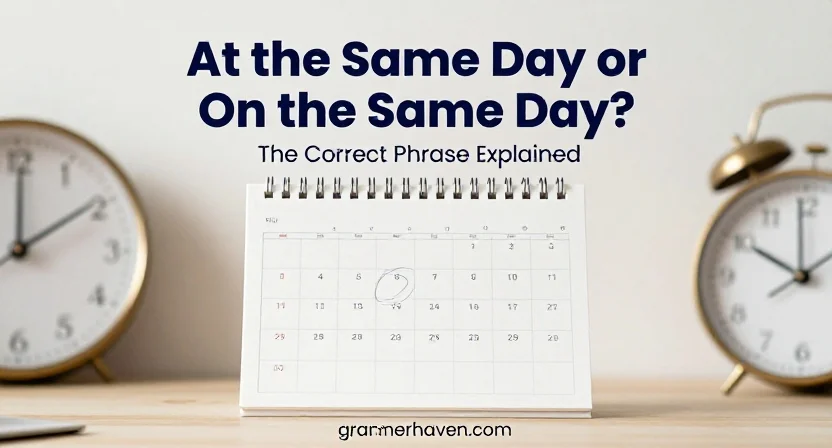
English prepositions can be tiny words with surprisingly big consequences. At, on, and in often appear in simple time expressions, yet choosing the wrong one can make a sentence sound unnatural. One common example is the question: “At the same day or on the same day?” If you’re talking about two events that happened during ...
Read more
“I’ve Added” vs “I Added”: What’s the Difference?
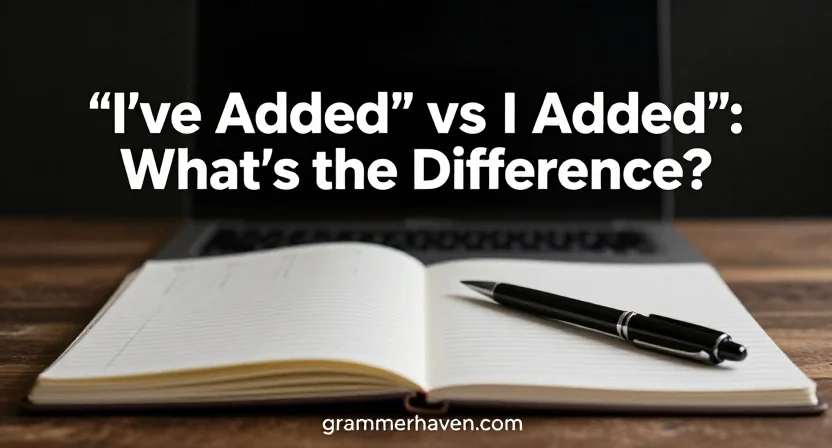
“I’ve Added” vs “I Added” shows how a small verb change can affect time, meaning, and the connection between past action and now in English. Both I’ve added and I added are perfectly correct forms that describe the same action but tell someone different things about time. I’ve added often keeps attention on information that ...
Read more
In Fact: Meaning, Definition, Grammar, Comma Rules & Usage
In Fact is a useful phrase in English that can emphasize a statement, correct an assumption, or add a detail. It can draw attention to something that is actually true and give your writing a more natural sound. You can use it in everyday conversation, professional writing, academic work, and formal explanations. Its flexibility helps ...
Read more
Mastering the Simple Present Tense: Rules, Uses & Mistakes
Mastering the Simple Present Tense helps English learners use English grammar for routine, facts, habits, and activities. The simple present tense is a basic grammatical tense known as the Simple Present Tense or Present Indefinite. It forms the backbone of everyday English because you use it for regular activities and things that stay true. A ...
Read more
Licence vs License: What’s the Difference? Usage and Examples
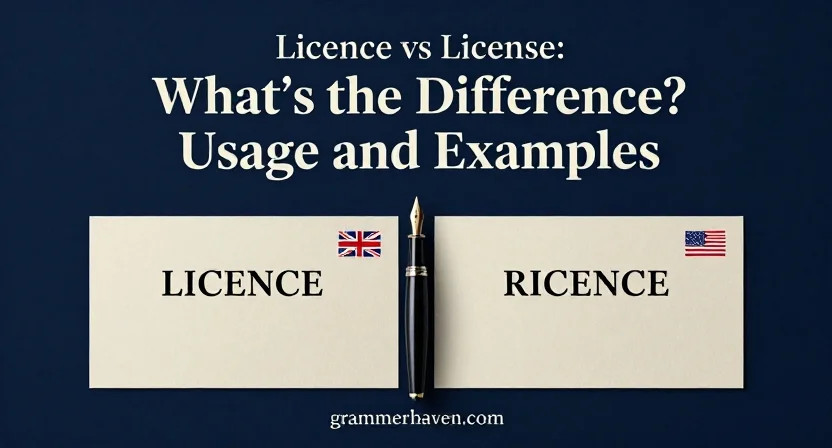
Licence vs License creates confusion because the difference appears in spelling, while the sound stays nearly identical. The grammatical function changes across English, especially in British English, where licence is the standard spelling for the noun form and license is the verb form. The spelling change can cause errors in writing when the English variety, ...
Read more
Put Two and Two Together Idiom: Meaning, Origin & Usage
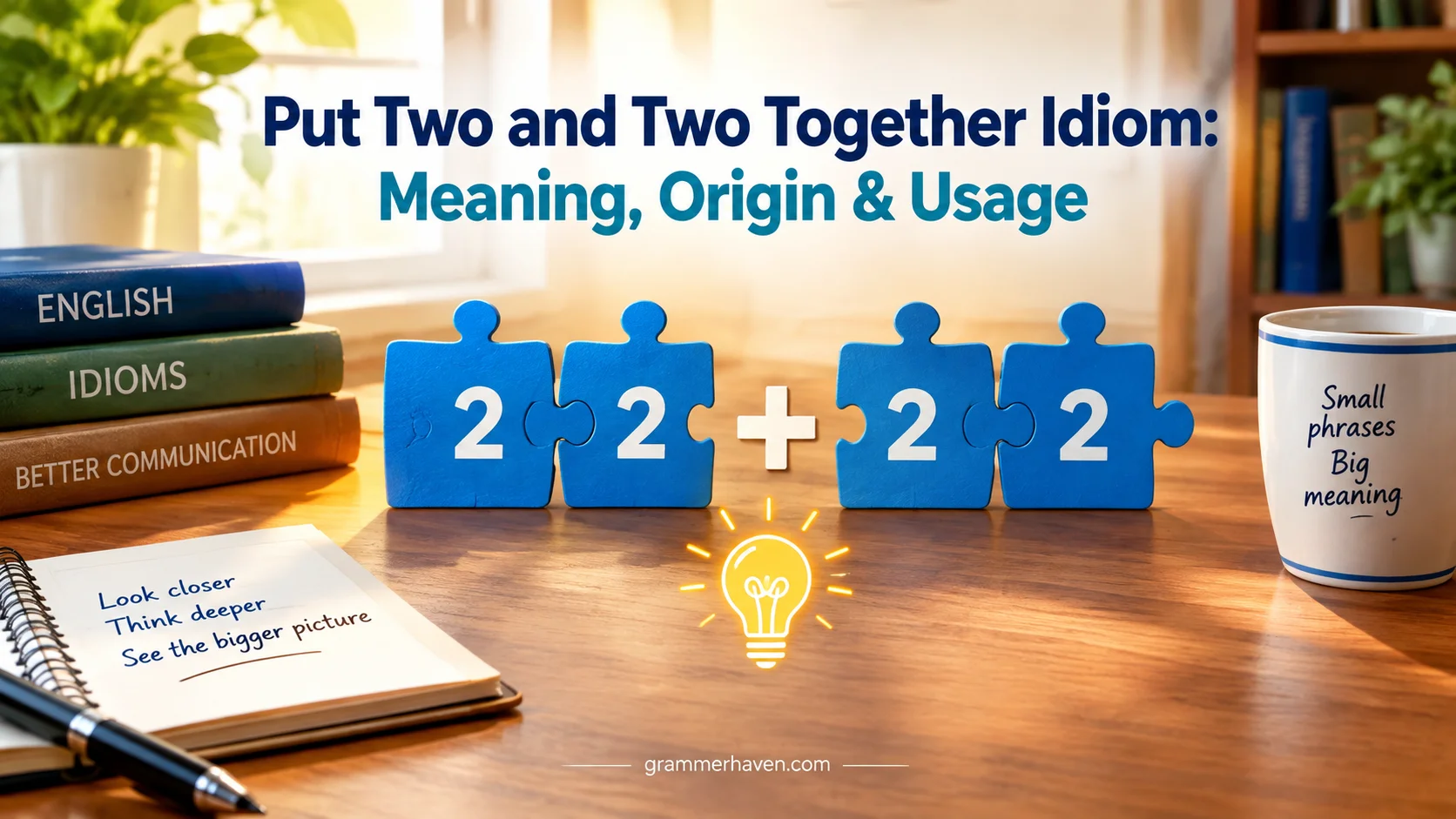
Put Two and Two Together Idiom means joining separate clues, pieces, and information until they fit and make sense. Its definition involves using information available to reach a conclusion when the answer isn’t directly stated. The expression appears in everyday conversations, stories, workplace discussions, and informal writing. Its idiom meaning depends on context, tone, and ...
Read more
Commensurate With or To? Which Is Correct?
Commensurate With or To uses the standard preposition with when you describe a matching degree, amount, or quality in English. The word commensurate works as an adjective meaning proportionate or equivalent in size, amount, quality, degree, or importance. Writers sometimes hesitate between commensurate with and commensurate to, but the usual construction is commensurate with. English ...
Read more
Fiancé vs. Fiancée: What’s the Difference?
Fiancé vs. Fiancée can confuse English readers because the words look almost identical and sound alike, yet their basic meaning has one important difference: gender. Fiancé traditionally describes a man who is engaged to be married, while fiancée describes a woman in the same situation. The extra e signals the feminine form. Both terms come ...
Read more
In the Same Day or On the Same Day: Which Is Correct?
In the Same Day or On the Same Day helps you choose the correct preposition when you discuss events happening during one particular calendar day. English language learners, even confident speakers, can face this common conundrum because prepositions are small words that affect meaning, direction, and clarity in sentences and phrases. The standard usage is ...
Read more
Conform With or Conform To? Meaning, Difference & Usage
Conform With or Conform To can feel confusing when you’re choosing the correct grammatical expression while writing a sentence. Conform to usually connects with an established rule, standard, requirement, regulation, or accepted pattern, while conform with can express agreement, consistency, or correspondence with another thing. Every day, writers weave through a maze of words, and ...
Read more