In Summer or In the Summer: Which Is Correct? Meaning, Difference & Examples
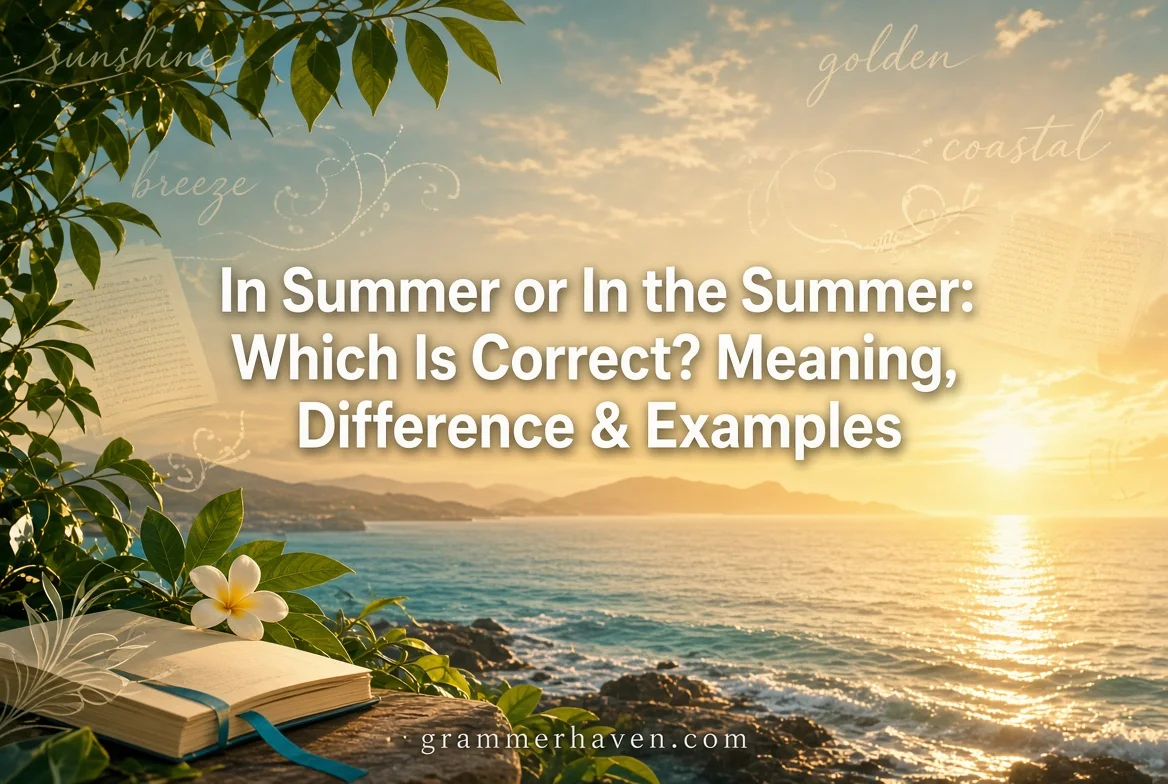
In Summer or In the Summer explains a common English grammar question about expressions, context, seasons, habits, and specific summer periods. Both forms are correct, but the difference depends on the context and intended meaning. In summer commonly refers to a general season, a usual idea, or a habit, such as eating ice cream during ...
Read more
Foul or Fowl: What’s the Difference? Meaning, Usage & Examples
Foul or Fowl is a classic English spelling confusion because these words sound alike but have different meanings. Foul can describe something unpleasant, offensive, dirty, smelly, or against the rules, including a foul smell from water that smelled foul or a chicken-like smell. In sports, a referee may call a foul for a sports violation, ...
Read more
Masonary vs Masonry: Which Spelling Is Correct?

Masonary vs Masonry explains the spelling difference between the incorrect masonary form and the correct term, masonry today. The two forms look remarkably similar, but masonry is the standard word in standard English. The error comes from an extra a before the ending “-ry.” Dictionaries, including Cambridge and Collins, list masonry as the accepted form. ...
Read more
Is It Correct to Say “Safe Travels”? Meaning, Grammar & Usage
Safe Travels is a perfect phrase for saying goodbye before someone may go on a trip, embark on a journey, or travel from airports and train stations. In everyday language, casual conversations, and a common scenario, this short expression can wish someone well with a simple, warm message such as good luck, best wishes, or ...
Read more
Waive vs Wave: What’s the Difference? Meaning & Usage
Waive vs Wave explains why these words cause confusion: they sound alike, yet their spelling, meaning, and context make their uses different. These distant cousins have different meanings, which creates a common snag when learning English. Waive refers to giving up something, such as rights or claims, often voluntarily. A person may waive the fee, ...
Read more
Have You Seen vs. Did You See: What’s the Difference?
Have You Seen vs. Did You See can make the right way to ask about someone’s experience feel confusing, but the time focus makes the distinction clear. “Have you seen” connects an experience to the present moment. It asks about something that happened ever, anytime, or up to now. You don’t need to specify when ...
Read more
Well Received vs. Well Accepted: Meaning, Difference & Usage
The expressions “well received” and “well accepted” look almost interchangeable at first glance. Both can describe something that people respond to positively. However, they emphasize different ideas. Well received usually focuses on a favorable reaction. It tells you how people responded when they encountered an idea, proposal, product, speech, message, performance, or person. Well accepted ...
Read more
Jewel vs Joule: Meaning, Difference, Spelling and Correct Usage
Jewel vs Joule can confuse readers because these words sound the same, yet their spellings, meanings, and usages are distinct in standard English. A jewel connects with gemstones, jewelry, beauty, valuable things, a precious stone, gem, decoration, diamond, and diamond ring, while a joule belongs to physics as an SI unit and unit of energy ...
Read more
Years of Experience or Years’ Experience? The Correct Grammar
Years of Experience or Years’ Experience? is a common grammar question about a standard construction used in American English for describing an amount of time spent working in a particular field or mastering a skill. On resumes, job descriptions, professional biographies, business websites, cover letters, and LinkedIn profiles, years of experience is a clear construction ...
Read more
This Is She or This Is Her? Which Is Correct?
This Is She or This Is Her can cause confusion when a friend calls and says, “May I speak with Emma?” You may hesitate while answering because both are common expressions. In traditional grammar, she is the subject form of the pronoun, while her can be an object or possessive determiner. The formal rule expects ...
Read more