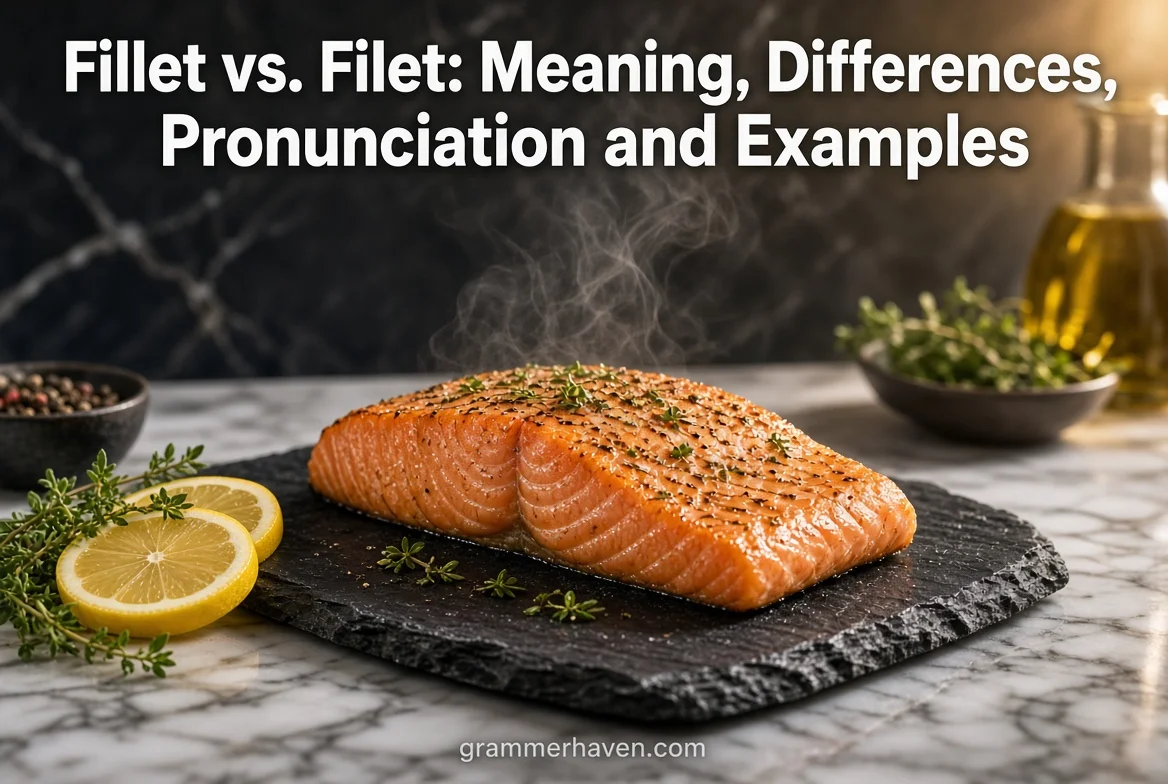
Fillet vs. Filet explains why two similar spellings can cause confusion in English and how regional preferences shape their usage in everyday writing and cooking.
In the vast world of the English language, words are like keys that unlock different meanings and nuances. Fillet and filet sound alike and may seem to mean the same thing, making it easy to mix them up. Both describe a boneless piece of meat or fish, but their usage varies across casual conversations and professional settings. British English generally favors fillet, while North American English often uses filet in culinary terms such as filet mignon.
Understanding this distinction builds your vocabulary and communication skills. Knowing the difference helps you avoid a culinary mix-up when reading a recipe, ordering food, or describing a dish. Restaurant menus and cookbooks provide useful examples of regional spelling preferences. Accurate spelling also prevents misunderstandings in a professional kitchen, where cooks must follow instructions carefully. Whether you’re preparing food for dinner guests, practicing for a spelling bee, or improving your everyday writing, consider your audience and follow the spelling conventions of your region. These simple habits help you choose the established spelling for familiar expressions.
Quick Answer: Fillet vs. Filet
Fillet and filet both refer to a piece of meat or fish with the bones removed. They can also function as verbs describing the process of cutting meat or fish away from the bones.
- Fillet: The standard spelling in British English and a common spelling in American English, especially in expressions such as fish fillet.
- Filet: Especially common in North American culinary English, including the familiar expression filet mignon.
- Meaning: Both words can describe a boneless cut of meat or fish.
- Pronunciation: British English commonly pronounces fillet as “FILL-it.” American English often pronounces both fillet and filet as “fill-AY,” although pronunciation varies.
- Best choice: Use fillet for general British English writing. In American English, follow the established expression and your publication’s style.
For example, a British recipe might call for a salmon fillet, while an American steakhouse menu might advertise filet mignon. Neither spelling is inherently wrong.
Fillet vs. Filet at a Glance
| Feature | Fillet | Filet |
| Basic meaning | A boneless piece of meat or fish | A boneless piece of meat or fish |
| British English | Standard spelling | Less common in general usage |
| American English | Common, especially for fish | Common in culinary contexts |
| Common expression | Fish fillet | Filet mignon |
| Part of speech | Noun and verb | Noun and verb |
| Plural form | Fillets | Filets |
| Verb forms | Filleted, filleting | Fileted, fileting |
| Main distinction | Regional preference and context | Regional preference and context |
The most important point is that fillet and filet usually share the same basic meaning. You generally don’t need to learn two separate definitions. Instead, learn which spelling suits your audience and which expressions have an established form.
What Does Fillet Mean?
A fillet is a piece of meat or fish cut away from the bones. Cooks often prepare fillets because they are convenient to portion, season, and cook. Depending on the food, a fillet may have its skin removed or left intact.
For example, a salmon fillet may be cooked with the skin on to help protect the flesh during cooking. A beef fillet, on the other hand, usually refers to a boneless cut of beef.
The word also has meanings outside cooking. In engineering and design, a fillet can describe a rounded transition between two surfaces. This technical meaning is separate from the culinary meaning, so context matters.
Fillet as a Noun
As a noun, fillet names the cut of meat or fish itself. You will commonly encounter it in recipes, supermarket labels, butcher shops, and restaurant menus.
Consider these examples:
- The chef seasoned a fresh salmon fillet with lemon and black pepper.
- We bought four chicken fillets for dinner.
- She ordered a grilled fillet of cod with roasted vegetables.
- The butcher recommended a tender beef fillet for the special occasion.
In each sentence, fillet refers to a portion of food rather than the act of preparing it.
The plural form is fillets. You simply add -s to the singular noun.
Example: The fish market sells fresh cod fillets every morning.
Fillet as a Verb
Fillet can also describe the action of removing meat or fish from the bones. When someone fillets a fish, they carefully separate the flesh from its skeleton using a suitable knife.
For example:
- The chef will fillet the trout before seasoning it.
- My grandfather taught me how to fillet a salmon.
- The cook filleted the fish and saved the bones for stock.
The verb forms follow familiar English spelling patterns:
| Verb form | Example |
| Base form: fillet | I can fillet a fish. |
| Third-person singular: fillets | She fillets the trout carefully. |
| Past tense: filleted | He filleted the fish yesterday. |
| Present participle: filleting | They are filleting fresh salmon. |
Notice that filleted doubles the final t before adding -ed. Similarly, filleting doubles the t before adding -ing.
Fillet in Technical and Other Contexts
Outside food preparation, fillet can describe a curved or rounded junction between two surfaces. Engineers, designers, and CAD users may encounter the term when modeling parts or smoothing sharp internal corners.
For example:
- The engineer added a fillet where the two surfaces met.
- The designer used a small fillet to soften the component’s corner.
In these examples, the word has nothing to do with meat or fish. Its meaning comes from the technical field in which it appears.
This distinction matters when choosing between fillet and filet. Although the spellings overlap in culinary usage, you shouldn’t automatically replace fillet with filet in technical writing.
What Does Filet Mean?
Filet is a spelling variant of fillet that is especially common in North American English. In food-related contexts, it usually refers to a boneless piece of meat or fish.
You may see it on restaurant menus, in steakhouse descriptions, or in recipes influenced by French culinary terminology. The best-known example is filet mignon, a tender cut of beef taken from the smaller end of the tenderloin.
However, filet isn’t limited to beef. You may also encounter expressions such as fish filet or chicken filet. Their naturalness depends on the region, publication, and particular food term.
Filet as a Noun
As a noun, filet identifies a boneless portion of meat or fish. It often appears in American culinary writing, particularly when describing restaurant dishes.
Here are some examples:
- He ordered a beef filet with roasted potatoes.
- The recipe calls for two fish filets.
- She chose filet mignon for her anniversary dinner.
- The restaurant serves a grilled filet of salmon.
The plural form is filets. Like fillets, it takes a simple -s ending.
Example: The chef prepared three beef filets for the dinner guests.
Although filet is familiar in American food writing, the spelling fillet remains correct in many of the same contexts. You should consider the intended audience instead of assuming that one form always replaces the other.
Filet as a Verb
Filet can also function as a verb meaning to cut meat or fish away from the bones. This use is less prominent in everyday writing than the noun, but it is valid.
For example:
- The chef will filet the fish before serving it.
- He learned to filet a trout during his cooking class.
- The cook fileted the fish and prepared the remaining bones for stock.
The verb forms can include filets, fileted, and fileting. In practice, writers should follow a reliable dictionary or their publication’s style guide when choosing these less familiar forms.
| Verb form | Example |
| Base form: filet | I can filet a fish. |
| Third-person singular: filets | He filets the fish at the counter. |
| Past tense: fileted | She fileted the trout yesterday. |
| Present participle: fileting | They are fileting the fish now. |
If you are writing for a British audience, fillet and its related forms will usually sound more natural. For North American readers, filet may fit the context, especially when it matches the terminology used in a recipe or menu.
Fillet vs. Filet in American and British English

Regional spelling is the clearest way to understand the difference between these words. However, the distinction isn’t absolute. American English uses both spellings, and specific culinary expressions can preserve a form that differs from the usual regional preference.
Fillet in British English
British English generally favors fillet for boneless meat and fish. You’ll commonly see this spelling in recipes, supermarkets, cookbooks, and restaurant menus.
Examples include:
- We bought two fresh salmon fillets.
- The chef prepared a chicken fillet with herbs.
- The restaurant serves fillet steak with seasonal vegetables.
- Could you fillet the fish before cooking it?
In these sentences, fillet works naturally as either a noun or a verb. The spelling remains the same whether you’re discussing fish, poultry, or beef.
If your article follows British English conventions, choosing fillet consistently is a sensible editorial decision.
Filet in American English
American English commonly uses filet in culinary expressions, especially when describing beef dishes. The word appears frequently on steakhouse menus and in references to French-inspired cooking.
Examples include:
- I’ll have the filet mignon, please.
- The chef prepared a grilled beef filet.
- The restaurant offers a premium filet with garlic butter.
However, American English also uses fillet. The expression fish fillet is familiar to American readers, and dictionaries recognize fillet as an American English word. Cambridge Dictionary lists both fillet and filet in its American entry for the noun and verb.
Therefore, the rule isn’t simply “British English uses fillet, and American English uses filet.” That shortcut misses common American expressions and established dish names.
Is Fillet Correct in American English?
Yes. Fillet is correct in American English, particularly in food descriptions such as fish fillet. The alternative filet is also accepted and is especially familiar in certain culinary settings.
Compare these examples:
- Fish fillet: A common description on American food packaging.
- Filet mignon: The established name of a popular steak.
- Beef fillet: Understandable in American English, although beef filet may sound more familiar in some restaurant contexts.
The best choice depends on the phrase you’re writing and the audience you’re addressing. If a recognized dish has a conventional spelling, preserve that spelling rather than changing it to match a general rule.
For consistency, follow the dictionary and style guide used by your publication. This approach works better than treating every difference as a strict grammar rule.
Fillet vs. Filet Pronunciation
Pronunciation adds another layer of confusion because the two spellings don’t always have different sounds. The pronunciation you hear often depends on the speaker’s dialect and the context.
In British English, fillet is commonly pronounced FILL-it. In American English, fillet and filet are often pronounced fill-AY, although other pronunciations occur.
Oxford Learner’s Dictionaries provides both pronunciations for filet, reflecting this variation.
How to Pronounce Fillet
In British English, fillet is commonly pronounced:
- Simple guide: FILL-it
- IPA: /ˈfɪl.ɪt/
The first syllable carries the stress, and the final t is pronounced. The word sounds similar to fill it when spoken naturally.
For example, a British speaker might say, “I’ll have a salmon fillet,” with a clearly audible final t in fillet.
American speakers may pronounce the same spelling differently, often using the pronunciation associated with filet.
How to Pronounce Filet
In American English, filet is commonly pronounced:
- Simple guide: fill-AY
- IPA: /fɪˈleɪ/
The stress falls on the second syllable, and the final written t is usually silent. The last syllable sounds like the word day.
For example, an American diner might ask for “filet mignon” using the familiar French-influenced pronunciation.
Are Fillet and Filet Pronounced the Same?
Sometimes, yes. In American English, both spellings can share the same pronunciation. In British English, fillet commonly has two syllables with stress on the first and a pronounced final t.
| Word and context | Common pronunciation |
| Fillet in British English | FILL-it |
| Fillet in American English | fill-AY is common |
| Filet in American English | fill-AY |
| Filet mignon | Commonly pronounced with the French-influenced fill-AY |
These are common patterns rather than rules that every speaker follows. Regional accents and individual preferences can influence pronunciation.
The practical lesson is simple: don’t assume that the spelling alone determines how everyone pronounces the word.
Why Do Fillet and Filet Have Different Spellings?
The two spellings share a French connection. English adopted the word from French filet, which developed from fil, meaning “thread.” The French word is also related to the Latin filum, meaning “thread.”
Over time, English developed the spelling fillet alongside filet. Both forms survived, with different preferences emerging across regions and culinary contexts. Collins English Dictionary traces fillet to Old French filet and ultimately to Latin filum.
This history helps explain why the words look so similar. They aren’t unrelated words that happen to share a meaning. They are closely connected forms that English speakers use in overlapping ways.
The French connection also helps explain the pronunciation of filet in American culinary English. However, the history doesn’t mean every modern use must follow French spelling or pronunciation. English has its own established conventions.
Fillet vs. Filet in Food and Cooking
Food terminology is where the distinction matters most. Both spellings can describe boneless portions, but the most natural choice often depends on the ingredient and the regional variety of English.
Fish Fillet vs. Fish Filet
A fish fillet is a portion of fish cut away from the backbone and, depending on preparation, other bones. The skin may remain attached or be removed. Fish fillets are popular because they are easy to portion and can be baked, grilled, pan-fried, or steamed.
Examples include:
- The recipe requires two cod fillets.
- Season the salmon fillet with lemon and dill.
- The chef removed the bones before cooking the fish.
Fish filet can describe the same kind of food, particularly in North American usage. However, fish fillet is also common in the United States.
Which should you choose? For British English, use fish fillet. For American English, either spelling may appear, but established product names and house style should guide your decision.
Beef Fillet vs. Beef Filet
Both beef fillet and beef filet can refer to a boneless cut of beef. The exact cut and its name depend on the butcher’s terminology and the culinary tradition.
In British English, beef fillet and fillet steak are familiar expressions. In American English, beef filet is also common, especially in restaurant descriptions.
For example:
- British usage: The menu features grilled fillet steak.
- American usage: The steakhouse serves a beef filet with peppercorn sauce.
Neither example changes the basic meaning of the word. The difference lies mainly in regional spelling and customary food terminology.
Chicken Fillet vs. Chicken Filet
A chicken fillet usually refers to a boneless portion of chicken. The expression may describe breast meat or another boneless section, depending on the product and local terminology.
Examples include:
- The recipe calls for two chicken fillets.
- Grill each chicken filet until it reaches a safe internal temperature.
- Slice the cooked chicken fillet and add it to the salad.
Both spellings are understandable. British recipes generally favor chicken fillet, while chicken filet may appear in North American food writing.
When writing a recipe, clarity matters more than making the wording sound fancy. Choose the form your audience recognizes and use it consistently.
What Does Filet Mignon Mean?
Filet mignon is a well-known steak cut from the smaller end of the beef tenderloin. The tenderloin is a long muscle along the back of the animal, and it is prized for its tenderness.
The expression comes from French. Filet refers to the cut, while mignon means small or delicate in this context. In American restaurants, filet mignon usually describes an individual steak rather than any random piece of boneless beef.
For example:
- She ordered filet mignon with mashed potatoes.
- The chef seared the filet mignon before finishing it in the oven.
The phrase has an established spelling. Even if you normally use fillet in British English, you should generally preserve filet mignon when referring to this specific dish.
This is an important distinction: a regional spelling preference doesn’t mean you should alter every fixed culinary expression.
Fillet vs. Filet in Example Sentences
Examples make the difference easier to remember. The following sentences show how each spelling works in everyday writing.
| Context | Example sentence | Why it works |
| British recipe | Season the salmon fillet with herbs. | Fillet is the usual British spelling. |
| American restaurant | The chef prepared a beef filet. | Filet is common in American culinary writing. |
| Fish preparation | He will fillet the trout before dinner. | Fillet functions as a verb. |
| American steakhouse | She ordered filet mignon. | This is the established dish name. |
| Plural noun | The market sells fresh fish fillets. | Fillets is the plural of fillet. |
| American plural | The chef prepared two beef filets. | Filets is the plural of filet. |
| Technical writing | The designer added a fillet to the corner. | The word has a separate technical meaning. |
Notice that the spelling depends on the context rather than a difference in the basic food meaning.
More Examples of Fillet and Filet
Using fillet:
- The fishmonger cut the salmon into individual fillets.
- We baked a cod fillet with garlic and parsley.
- She learned to fillet a fish during her cooking course.
- The British menu lists fillet steak as a main course.
Using filet:
- The American restaurant offers a grilled beef filet.
- He ordered filet mignon for his birthday dinner.
- The recipe uses one large fish filet.
- The chef fileted the fish before preparing the stock.
These examples show how both spellings can appear naturally. They also demonstrate why you should consider the audience and context before editing one form into the other.
Common Mistakes When Using Fillet and Filet
Even though these words are easy to understand, several misconceptions can lead to awkward writing.
Assuming One Spelling Is Incorrect
The first mistake is treating fillet or filet as a misspelling. Both forms are recognized in English.
Better approach: Choose the spelling that matches your audience and the expression you’re using.
Believing Fillet Always Means Fish
Some writers assume that fillet applies only to fish while filet applies only to beef. That distinction doesn’t reflect actual usage.
Better approach: Remember that both spellings can describe boneless meat or fish. Regional convention often determines the preferred form.
Assuming Filet Is Always American
Although filet is especially common in North American English, it also appears in established expressions used internationally, including filet mignon.
Better approach: Check the complete expression rather than relying only on a regional rule.
Confusing Spelling With Pronunciation
The two forms can sound the same in American English. A different spelling doesn’t guarantee a different pronunciation.
Better approach: Learn the common regional pronunciation patterns and recognize that speakers may vary.
Switching Spellings Without a Reason
Using fillet in one paragraph and filet in the next can make an article feel inconsistent if the context doesn’t justify the change.
Better approach: Follow one spelling convention for general terms. Preserve established names such as filet mignon.
Changing Established Dish Names
Replacing filet mignon with fillet mignon simply to make every spelling uniform is usually a poor editing choice.
Better approach: Keep conventional dish names intact. Consistency should improve clarity rather than erase established terminology.
Fillet or Filet: Which One Should You Use?

The right spelling becomes easier to choose when you consider your audience, writing purpose, and the expression itself.
Use Fillet for British English
If you’re writing a British English article, recipe, or menu, fillet is generally the safest choice for ordinary food-related meanings.
Examples:
- salmon fillet
- chicken fillet
- fillet steak
- fillet the fish
This convention helps your writing sound natural to British readers.
Use Filet When American Culinary Usage Calls for It
For American English, filet is especially familiar in restaurant terminology and expressions such as filet mignon. It also appears in phrases such as beef filet.
However, don’t assume that every American food reference needs filet. Expressions such as fish fillet remain common.
Follow the Original Recipe or Style Guide
If you’re adapting a recipe, check whether it follows British or American English. A publication may have a preferred spelling for general references, and maintaining that choice makes the article easier to read.
For example, if your recipe uses salmon fillet throughout, there’s little reason to switch to salmon filet halfway through unless you’re quoting a product name or established term.
Preserve Established Culinary Expressions
Some food terms have conventional spellings that readers recognize immediately. Filet mignon is the clearest example.
When a fixed expression has an established form, use it even if your general spelling preference differs.
Use the Correct Term in Technical Writing
In engineering or design, fillet has a recognized meaning involving a rounded junction between surfaces. Don’t replace it with filet just because the latter appears in culinary English.
The intended meaning determines the word choice.
Fillets vs. Filets: Plural Forms
The plural forms are straightforward. Add -s to the spelling you choose.
| Singular | Plural | Example |
| Fillet | Fillets | We purchased three salmon fillets. |
| Filet | Filets | The chef prepared two beef filets. |
The same principle applies when the word functions as a noun in a sentence. If you choose fillet, write fillets. If you choose filet, write filets.
The verb forms follow their respective spellings too:
- Fillet: fillets, filleted, filleting
- Filet: filets, fileted, fileting
Because the filet verb forms are less familiar to some readers, check a dictionary or follow your editorial style guide when writing formal culinary instructions.
See also: A Big Ask: Meaning, Origin, Examples and How to Use This Idiom
FAQs:
Is Fillet or Filet Correct?
Both spellings are correct. Fillet is the standard spelling in British English, while filet is especially common in North American culinary contexts. American English also uses fillet, particularly in expressions such as fish fillet.
Is Filet American or British?
Filet is especially common in North American English. British English generally prefers fillet for ordinary references to boneless meat or fish. However, British speakers also recognize established expressions such as filet mignon.
Is Fillet the Same as Filet?
In culinary contexts, the two words often have the same basic meaning: a boneless portion of meat or fish. Their main difference is spelling preference and context. Fillet also has technical meanings that don’t necessarily apply to filet.
Why Is the T Silent in Filet?
In the common American pronunciation of filet, the word follows a French-influenced pronunciation pattern, so the final t is silent. However, pronunciation varies across regions and speakers.
Should I Write Fish Fillet or Fish Filet?
Both forms occur in English. Fish fillet is common in British and American English, while fish filet also appears in North American usage. Choose the form that fits your audience, product name, or style guide.
Is Filet Mignon the Same as Beef Fillet?
Not exactly. Filet mignon refers to a specific steak cut from the smaller end of the beef tenderloin. Beef fillet is a broader term and may refer to the tenderloin cut more generally, depending on regional terminology.
What Is the Plural of Filet?
The plural is filets. For example, “The restaurant prepared four beef filets.” The plural of fillet is fillets.
Conclusion:
The difference between fillet vs. filet mainly involves regional spelling preferences and culinary conventions. Both words can describe a boneless piece of meat or fish, and both can serve as verbs meaning to remove flesh from bones. British English generally favors fillet, while American English often uses filet in terms such as filet mignon. However, fillet also remains common in American English, particularly when referring to fish.
When choosing between these spellings, consider your audience and the context. Use fillet in standard British English and follow established American culinary conventions when appropriate. Most importantly, maintain consistency throughout your writing. Understanding the difference between fillet and filet will help you use both spellings correctly in recipes, restaurant menus, and everyday English.