Vice Versa or Visa Versa: Which Spelling Is Correct?
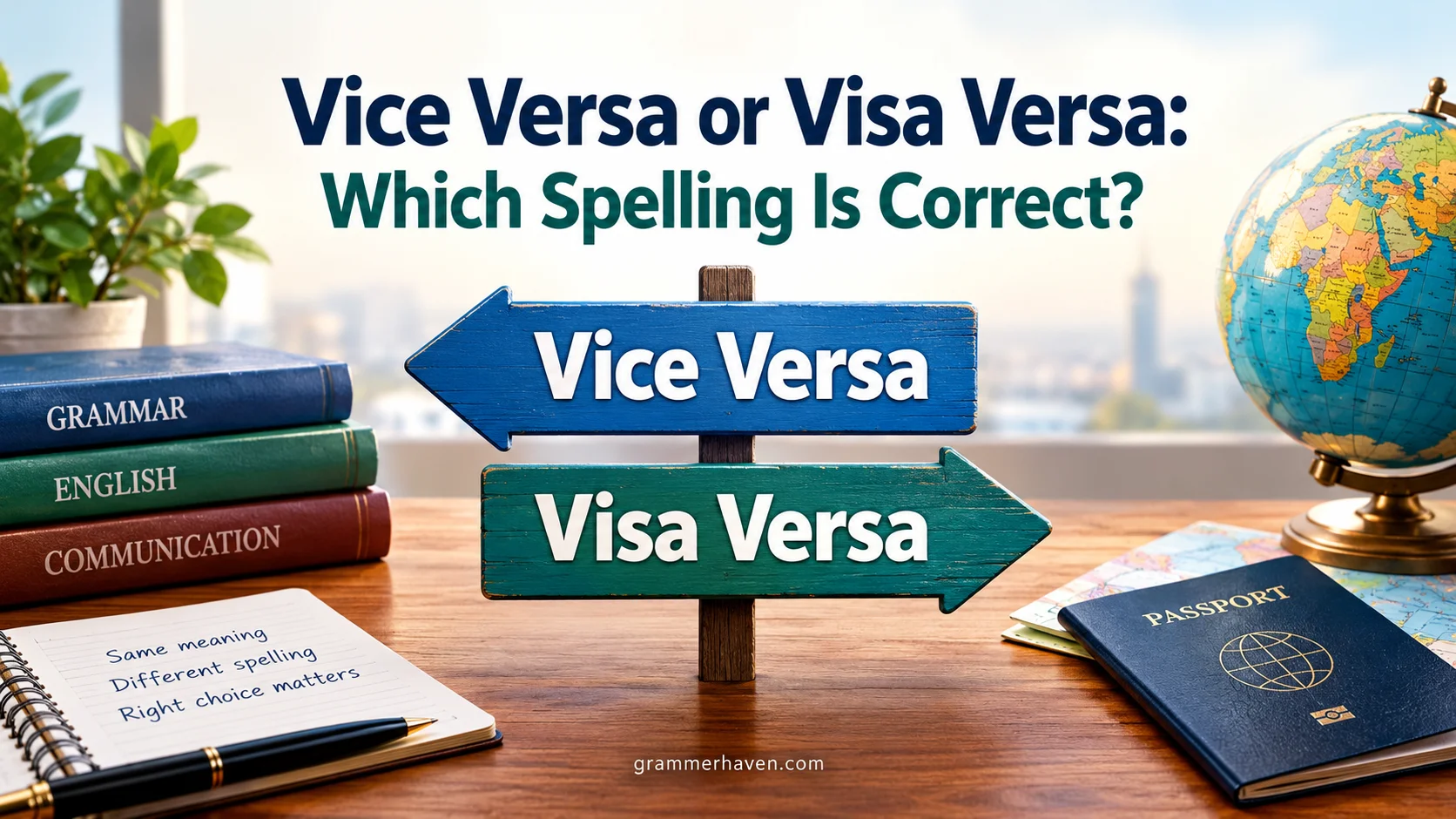
Vice Versa or Visa Versa is a common spelling mix-up that confuses fluent English speakers because the two forms often sound alike in speech. The correct spelling is vice versa, not visa versa. This phrase works as an adverb and expression meaning “the other way around.” It can describe an order changed or a relationship ...
Read more
Eachother or Each Other: Which Is Correct? Complete Guide

Eachother or Each Other is a common grammar question about spelling, forms, and the correct use in standard English. The confusion comes from the same sound, while the forms are spelled differently. The correct form is each other, written as two separate words with a space. Eachother is an incorrect, nonstandard spelling. The Cambridge Dictionary ...
Read more
Each or Every: When Should You Use Each One?

Each or Every is a common grammar question because both words can refer to more than one person or thing in English grammar. Each and Every are similar, but the choice depends on the meaning you want in your sentences. Each gives more emphasis to members of a group individually, while Every presents the complete ...
Read more
Affect vs. Effect: How to Use Each Correctly?
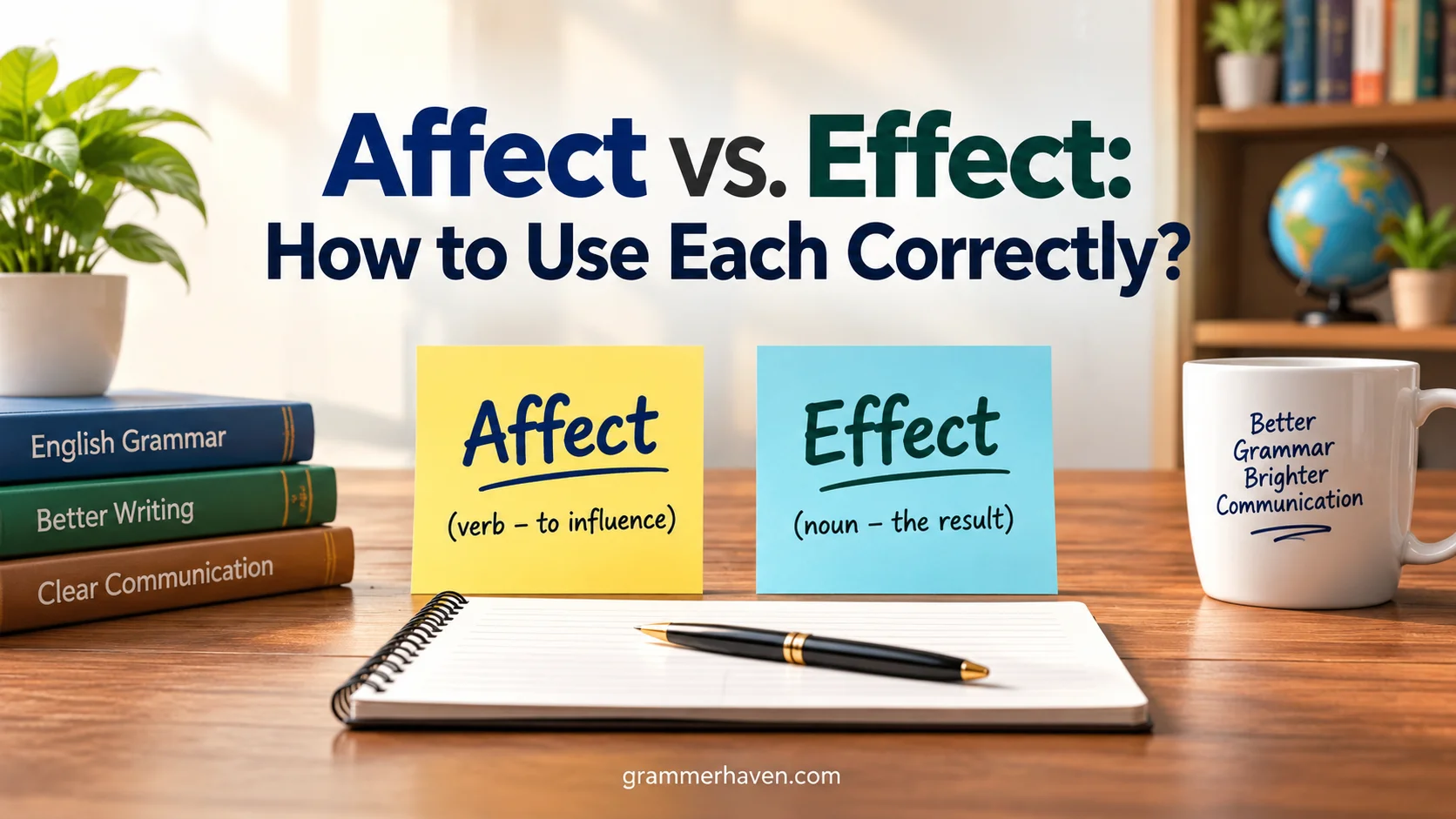
Affect vs. Effect can confuse native speakers because English grammar uses each word differently in everyday writing and in common sentences. The main distinction is that affect is a verb, while effect is a noun. Affect means to influence something, while an effect means the result of that influence. This grammar rule helps you choose ...
Read more
Lie Down vs. Lay Down: Which Is Correct?

Lie Down vs. Lay Down is a common grammar question because these phrases sound similar, but their meaning and use are different. Lie down means to recline or move yourself into a horizontal position, while lay down means to put or place someone or something somewhere. The basic distinction becomes clearer when you change the ...
Read more
Grateful or Greatful: Which Spelling Is Correct?
Grateful or Greatful can confuse readers at first glance, since greatful seems natural when you combine great with the suffix -ful, but the correct spelling is grateful. The standard spelling in English is grateful, a word listed in major dictionaries, including Merriam-Webster. Its meaning describes being thankful or appreciative, often for something helpful, pleasing, or ...
Read more
Discrete or Discreet: Which Word Is Correct?
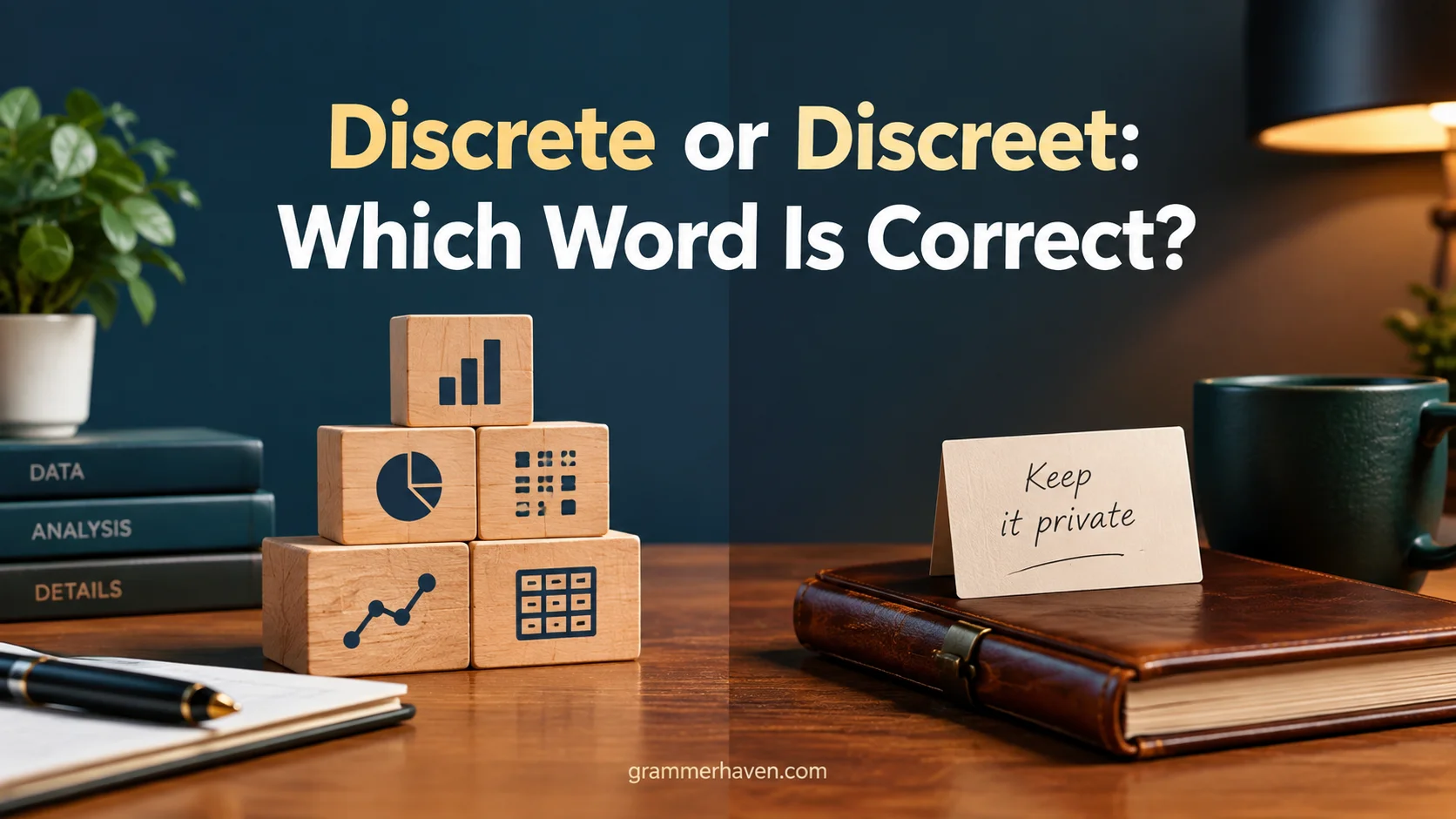
Discrete or Discreet words sound exactly alike, but they mean something different; this tiny spelling difference can completely change a sentence. Discrete describes things that are separate, distinct, and individually identifiable. Discreet describes someone who acts carefully, tactfully, or privately, without attracting attention. A professional writer or English learner can connect each word with its ...
Read more
Either or Questions: Meaning, Grammar Rules and 50+ Examples
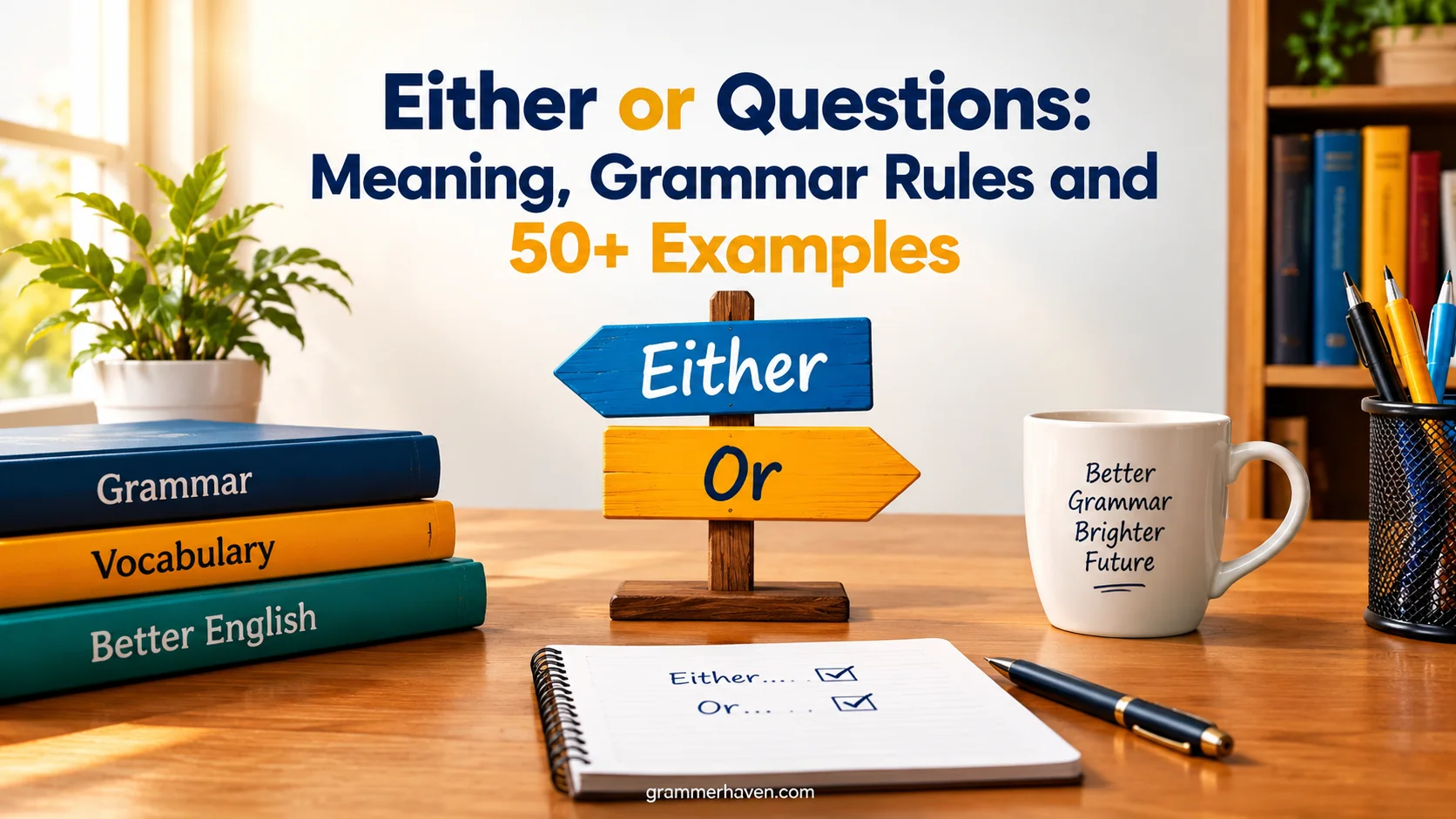
Either or questions give you two alternatives, helping you choose between options in restaurants, classrooms, interviews, work, and conversations. A classic example is asking a friend, “Do you prefer Coffee or tea?” You can also ask whether someone wants to leave now or later, or stay home or go out. These questions help you identify ...
Read more
Laid or Layed: Which Spelling Is Correct?
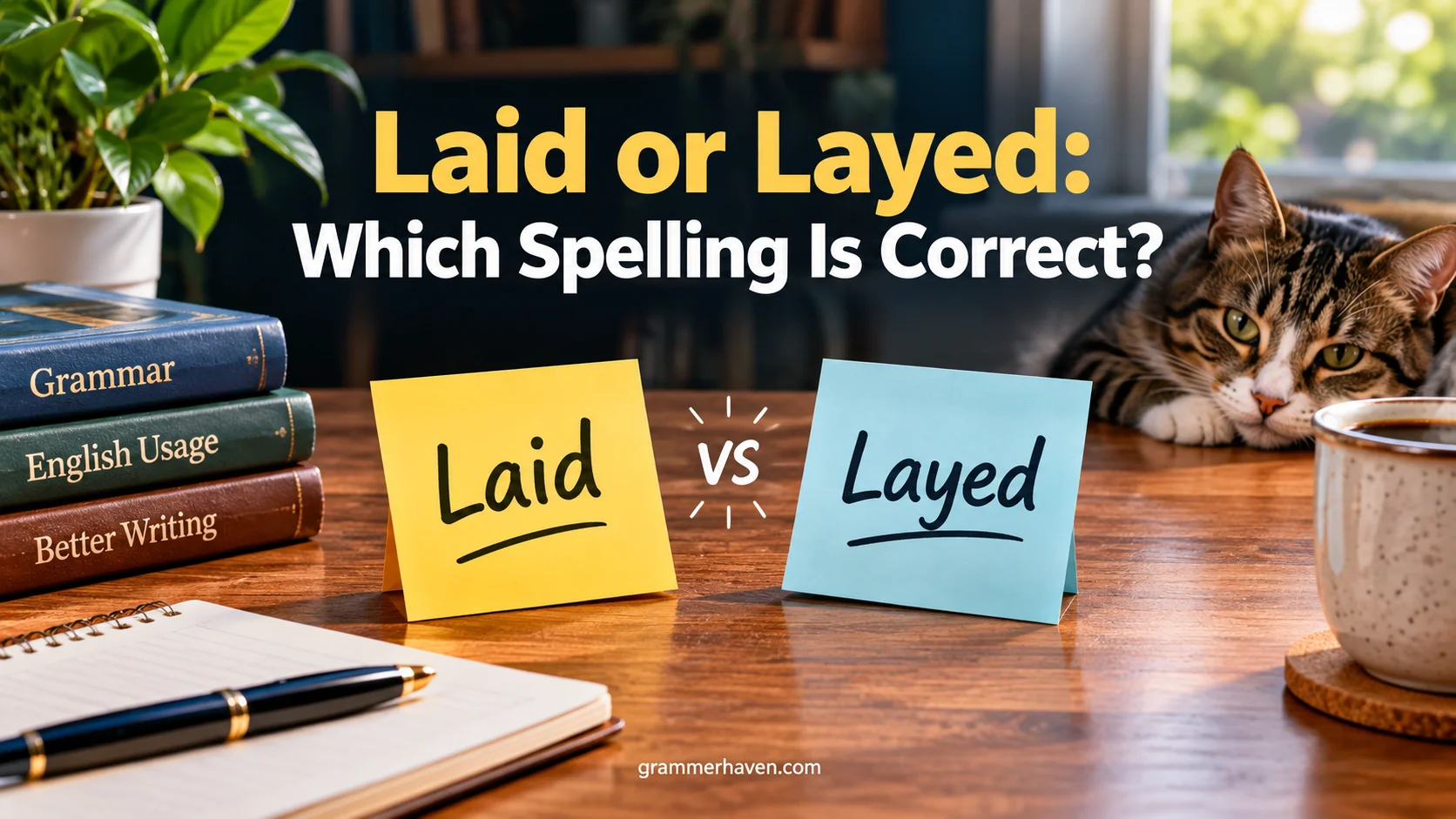
Laid or Layed can confuse English learners, writers, and professionals checking their spelling in an email, post, or essay. The correct word in standard English is laid. It is the past tense and past participle of the verb lay, meaning placed, set down, arranged, or put somewhere. The -ed spelling may suggest a familiar spelling ...
Read more
Axe vs Ax: Which Spelling Is Correct? Meaning, Usage & Examples
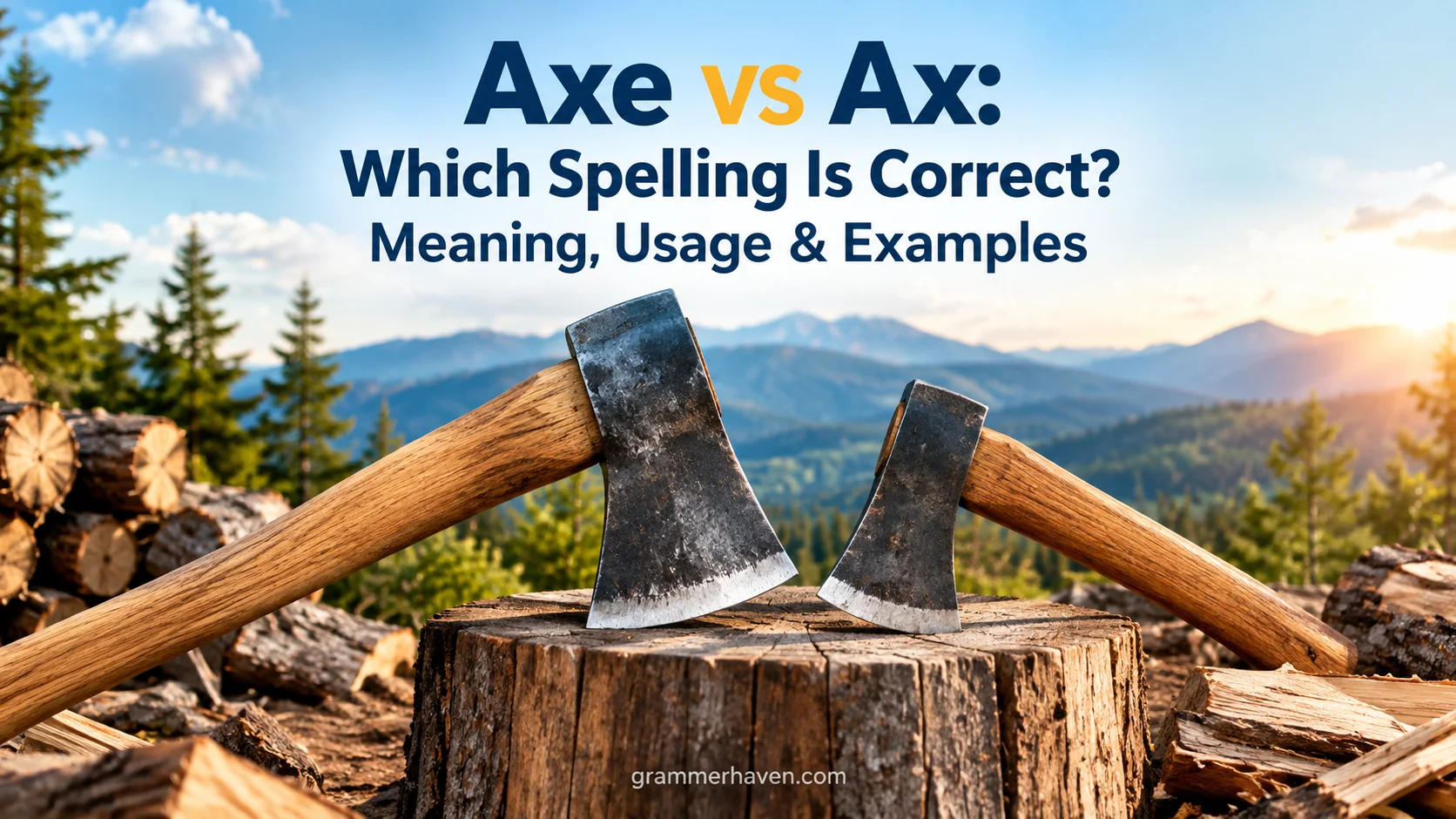
Axe vs Ax are both correct spellings for the same word, with the main difference being regional preference rather than meaning or pronunciation. In American English, ax is a common form, while axe is also accepted by major American dictionaries. In British English, axe is more familiar. Both forms describe the same tool and can ...
Read more