Imminent or Eminent: Which Word Is Correct?
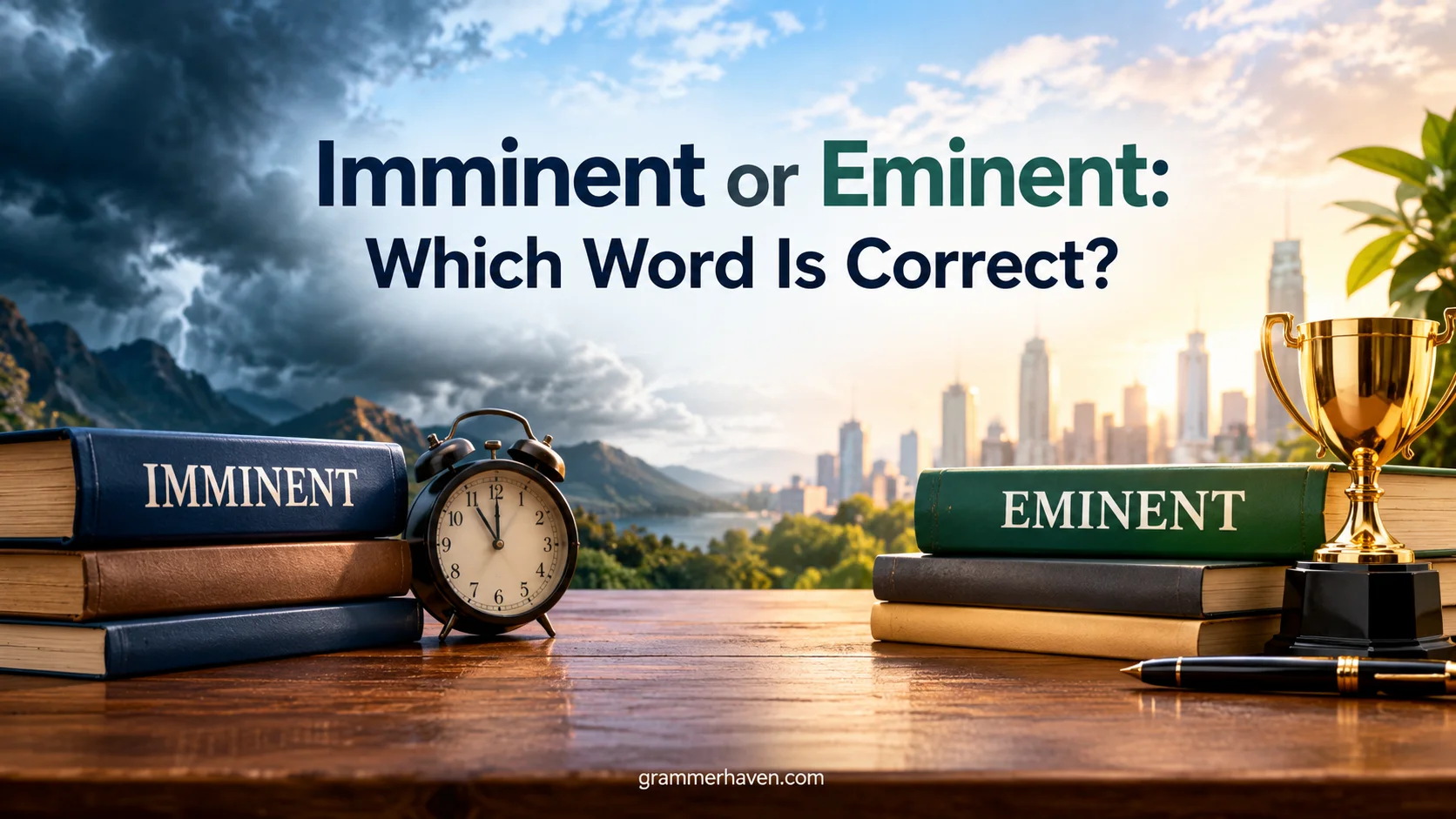
Imminent or Eminent explains two similar words: imminent means about to happen, while eminent describes a respected, important, or prominent person. Imminent and eminent can confuse experienced writers because they sound similar, but their meanings are not identical. The main difference is that imminent describes something about to happen, such as an imminent storm that ...
Read more
Preform or Perform: Which Word Is Correct?

Preform or Perform can confuse writers because these words sound similar but differ in meaning, context, and spelling. Perform is used in everyday English, business writing, education, medicine, entertainment, and technology to do, carry out, complete, present, or execute an action. A doctor performs an operation, while a performer may present something to an audience. ...
Read more
Separate or Seperate: Which Spelling Is Correct?
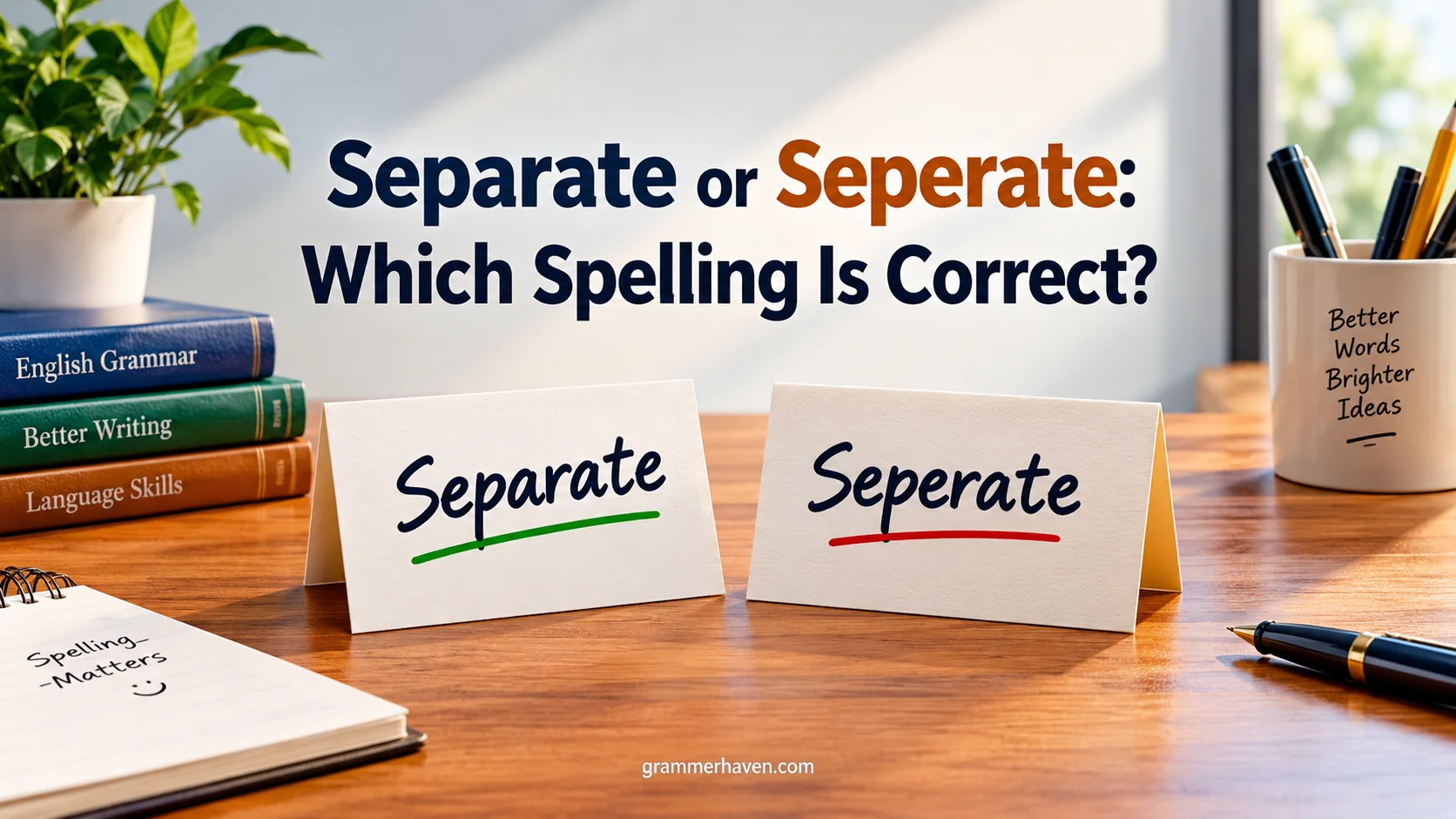
Separate or Seperate: separate is the correct spelling, while seperate is an incorrect spelling and a common spelling mistake in the English language. The standard English word separate can mean keeping things apart, distinct, or divided, depending on the context. Its pronunciation may cause confusion because the middle vowel has a weak, unclear sound, which ...
Read more
Crow vs Raven: What’s the Difference?
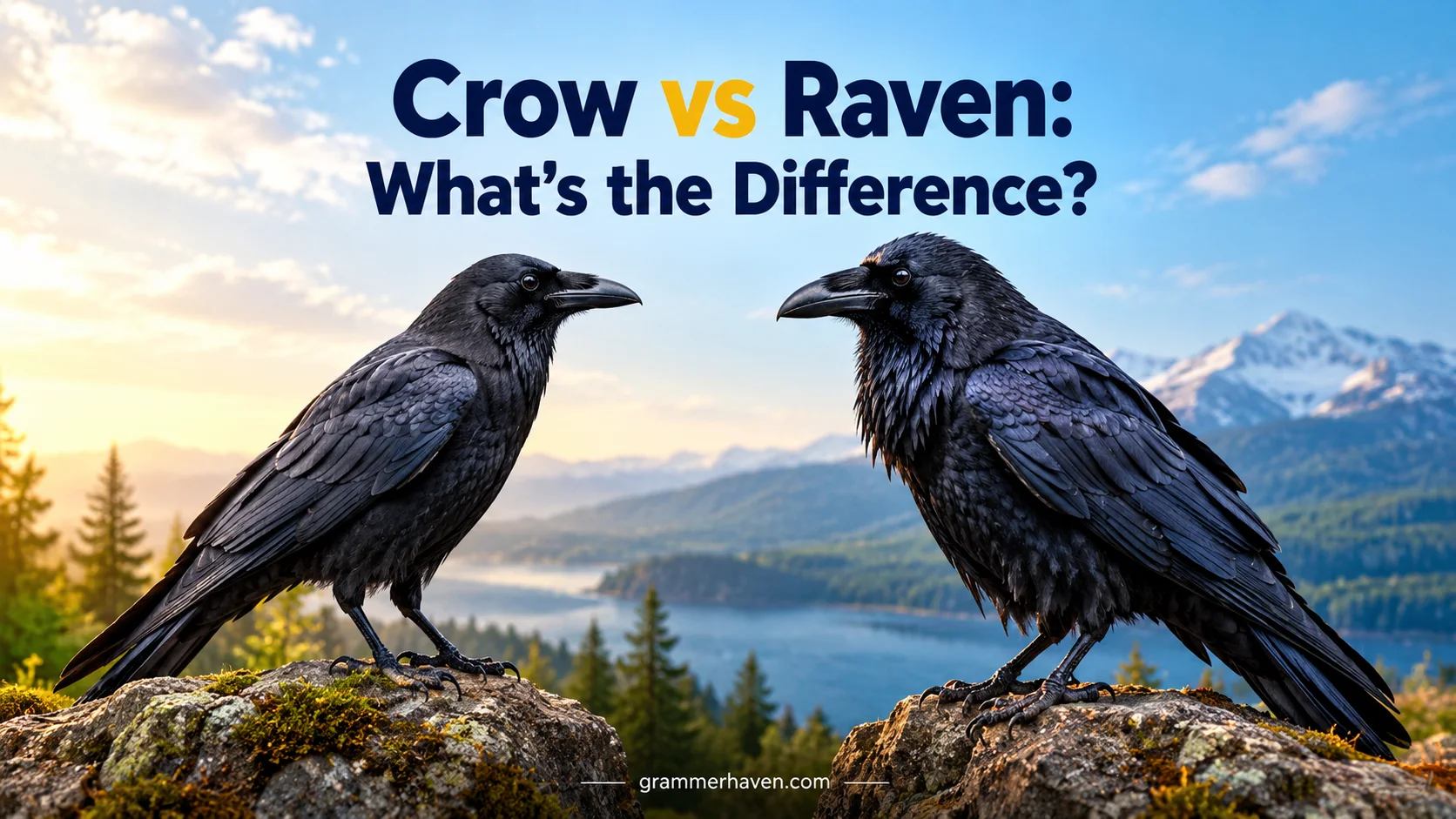
Crow vs Raven becomes easier when you compare size, bill, tail shape, and voice instead of judging a dark bird by appearance alone. Both belong to the Corvidae family, but the American Crow and Common Raven are different species. Their black coat, mysterious image, and role in stories and myths can make identification confusing. A ...
Read more
Onto or Into: What’s the Difference? Meaning, Rules & Examples
Onto or Into explains a common grammar question about movement, direction, position, and the difference in a sentence. Writers often feel confused about which word to use when describing a change in direction or position. Onto describes movement toward a surface, such as when a cat jumped onto a table, while into describes movement toward ...
Read more
Follow Up or Follow-Up: Which Is Correct?

Follow Up or Follow-Up explains a common spelling mix-up for writers, professionals, and people who need the right form in clear writing today. The phrase follow up works as a verb, while follow-up works as a noun or adjective. Followup is not the standard form in modern general-purpose American English or American English. This rule ...
Read more
Cancellation vs. Cancelation: Which Spelling Is Correct?
Cancellation vs. Cancelation is a spelling choice for writers with a common question in school, work, and online use. A pause mid-sentence can happen when a tiny or big doubt appears about which form is right. Both versions have the same basic meaning and sound the same, yet their spellings create confusion for readers. Cancellation ...
Read more
Lay or Lie: Which Is Correct? A Complete Guide

Lay or Lie can seem confusing, but the right choice becomes clear when you match each verb to its meaning, form, and role in a complete sentence. Lay and lie are verbs that cause confusion for many English speakers, including native English speakers and experienced English speakers. If you have stopped mid-sentence while trying to ...
Read more
Less Than vs Greater Than: Meanings & Easy Way to Remember
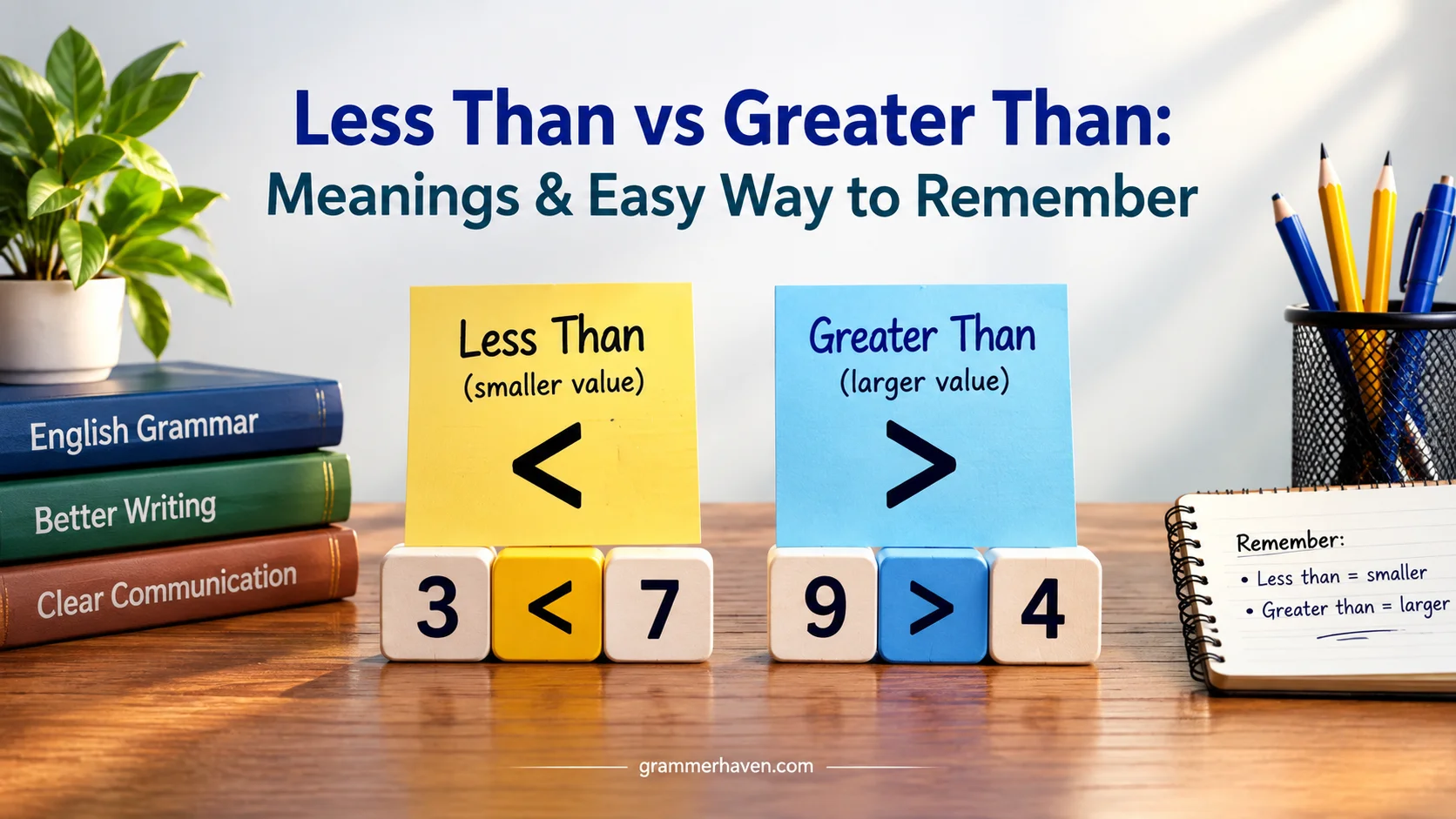
Less Than vs Greater Than becomes easier when you connect each symbol to a number’s position, size, and relationship instead of memorizing rules. In math, < shows that one value is smaller than another, while > shows that one value is larger. When comparing numbers, the number line gives a clear picture: numbers farther to ...
Read more
Vice Versa or Visa Versa: Which Spelling Is Correct?
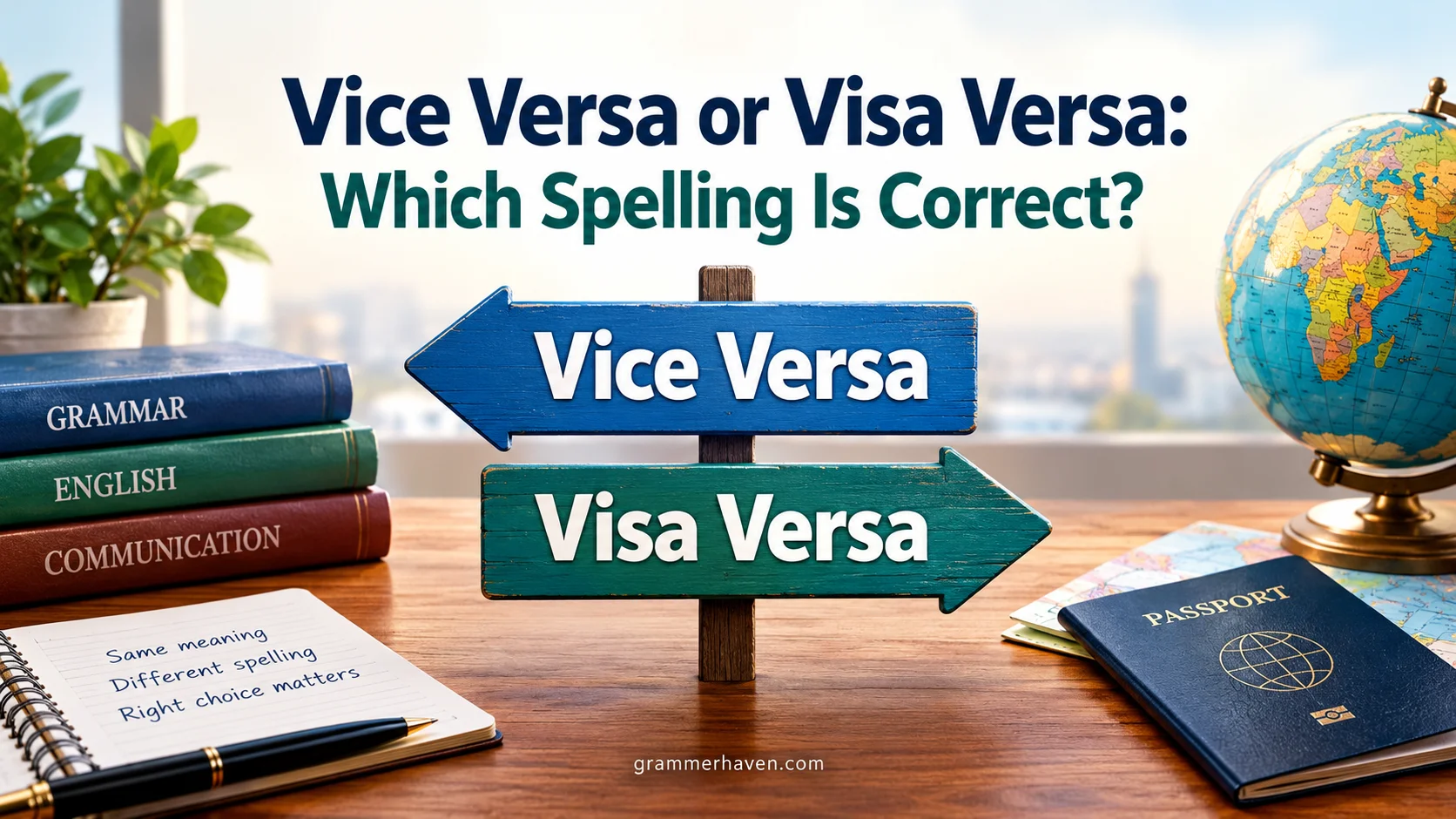
Vice Versa or Visa Versa is a common spelling mix-up that confuses fluent English speakers because the two forms often sound alike in speech. The correct spelling is vice versa, not visa versa. This phrase works as an adverb and expression meaning “the other way around.” It can describe an order changed or a relationship ...
Read more